Table of Contents
Why Contractors Underbid Without a Professional Estimate
By Fusion Assist | Accurate Estimates. Fast Turnaround. Real Results.
Underbidding Is the Silent Profit Killer
Across the United States, thousands of contractors win jobs every year only to discover—months later—that the project was underbid. Margins disappear, cash flow tightens, and stress replaces confidence. What many contractors fail to realize is that underbidding is rarely caused by bad luck. It’s almost always caused by estimating gaps.
Search trends show a sharp rise in queries related to construction estimating mistakes, why projects lose money, and how contractors underbid. The root cause behind most of these searches is the same: estimates prepared without professional systems, checks, and regional pricing logic.
Fusion Assist works with contractors nationwide who come to us after learning this lesson the hard way. The difference between profitable contractors and struggling ones is not how hard they work—it’s how accurately they price work before it begins.
What Underbidding Really Means in Construction
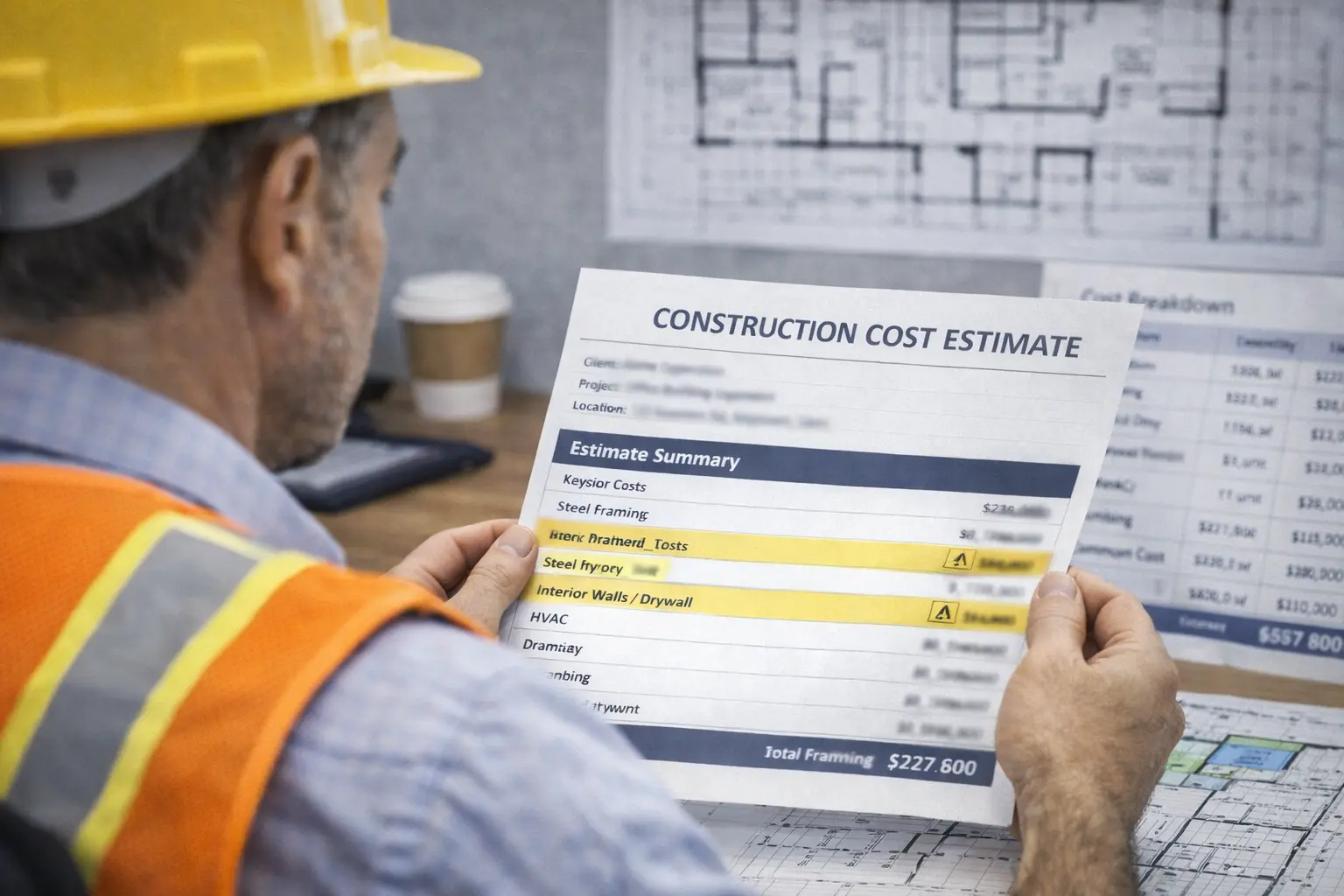
Underbidding is not simply “being too cheap.” It occurs when the estimated project cost does not reflect the true cost of labor, materials, equipment, overhead, and risk.
Common outcomes of underbidding include:
- Working months with little or no profit
- Cash flow shortages
- Constant change order dependence
- Crew burnout
- Strained client relationships
- Reduced ability to bid future projects
Many contractors confuse winning the bid with winning the project. They are not the same.
The Most Common Reasons Contractors Underbid
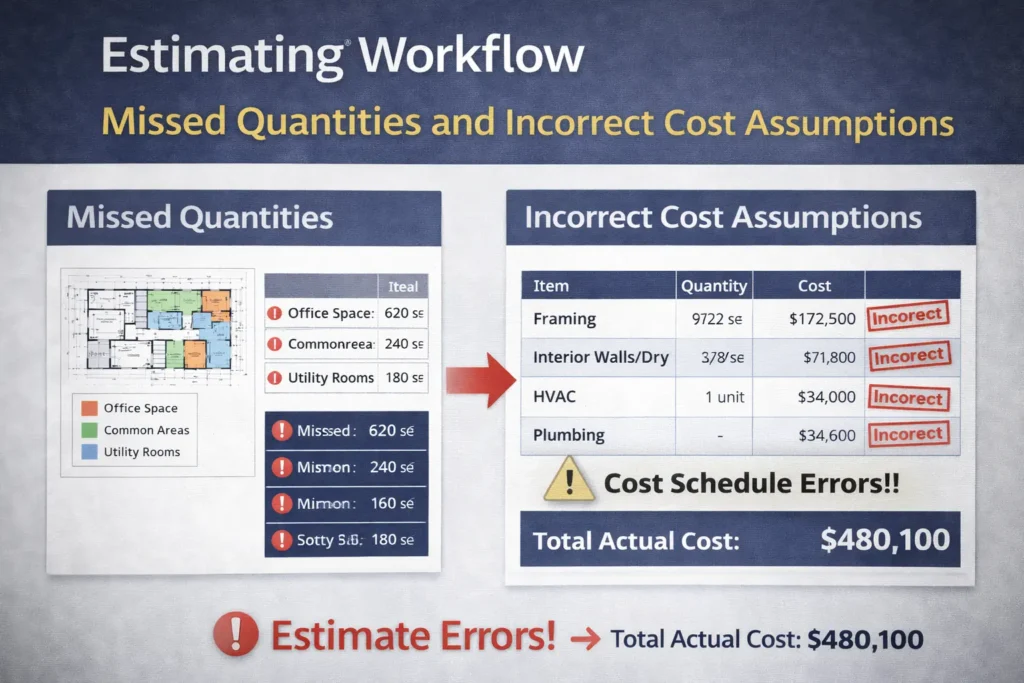
Incomplete takeoffs
Missed quantities are one of the biggest causes of underbidding. Even experienced contractors overlook:
- Minor architectural details
- MEP coordination items
- Temporary works
- Finishes, accessories, and fixings
Small omissions add up quickly on commercial and multi-trade projects.
Unrealistic labor assumptions
Many contractors underestimate:
- Crew productivity
- Site constraints
- Learning curves
- Weather delays
- Access limitations
Labor is often the largest cost component. Underestimating hours by even 10–15% can eliminate profit entirely.
Outdated or generic pricing
Using last year’s pricing—or copying numbers from a previous project—no longer works. US material prices fluctuate rapidly due to:
- Supply chain disruptions
- Fuel costs
- Regional demand
- Labor shortages
Professional estimators continuously update pricing databases to reflect real market conditions.
Ignoring indirect costs
Indirect costs are often underpriced or ignored altogether, including:
- General conditions
- Site supervision
- Temporary utilities
- Safety compliance
- Insurance and bonding
- Permits and inspections
These costs do not show up clearly in drawings—but they impact profitability.
Over-reliance on square-foot pricing
Square-foot pricing may work for early feasibility checks—but it is dangerous for bidding. Projects vary too widely in:
- Design complexity
- Specifications
- Systems
- Location
- Labor conditions
Professional estimates are built from quantities upward—not averages downward.
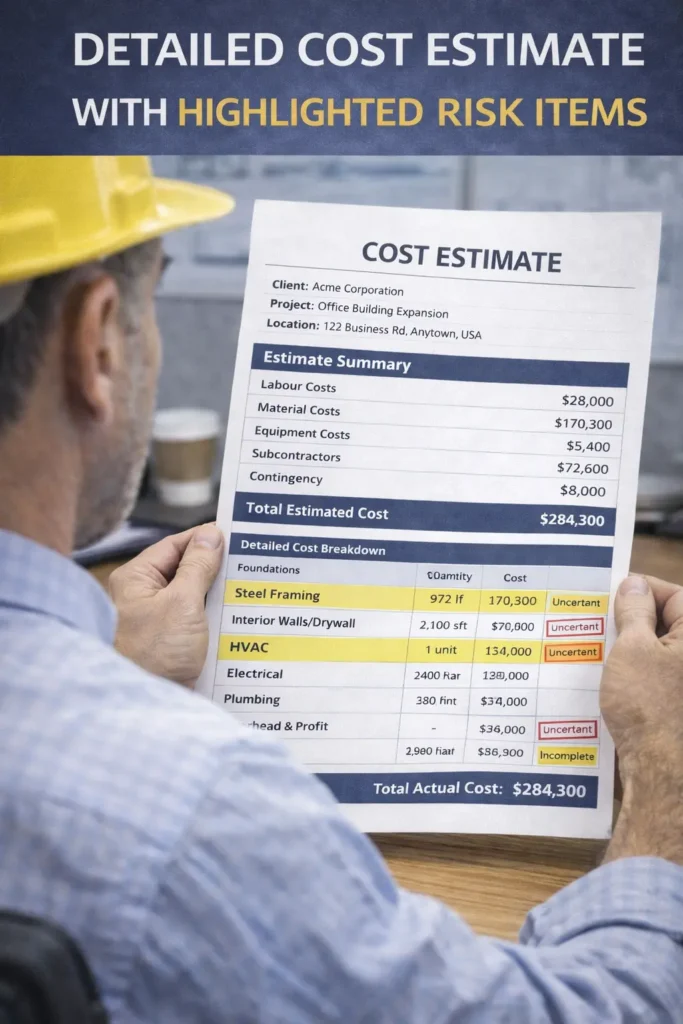
Why In-House Estimating Increases Underbidding Risk
Many contractors assume in-house estimating is safer. In reality, it often increases risk due to:
- Time pressure from site responsibilities
- Lack of peer review
- No formal QA/QC process
- Limited pricing data
- Estimator fatigue
Late-night estimating after long site days leads to shortcuts—and shortcuts lead to underbidding.
How Professional Estimating Prevents Underbidding
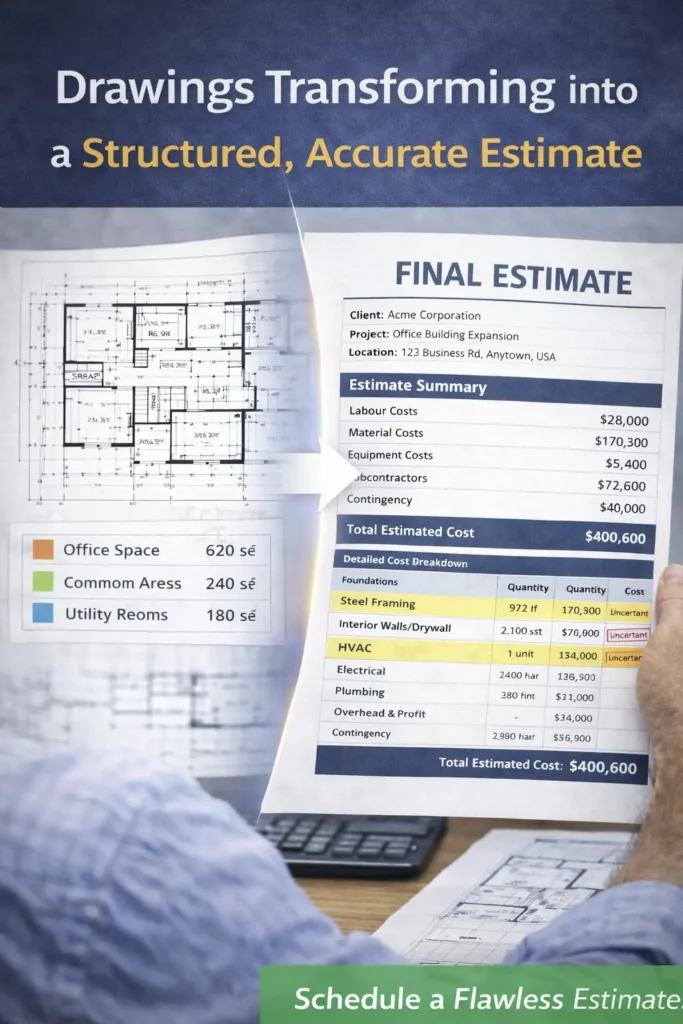
Professional estimating services like Fusion Assist reduce underbidding by introducing systems, structure, and accountability.
Full-scope takeoffs
Every trade and system is measured methodically, reducing missed items.
Realistic labor modeling
Productivity rates are adjusted for project type, region, and site conditions.
Regional pricing accuracy
Labor and material pricing reflects real local market conditions—not national averages.
Risk identification
Professional estimators identify scope gaps, unclear details, and high-risk assumptions before the bid is submitted.
Independent review
Every estimate goes through a second layer of review—something most in-house teams lack.
The Hidden Cost of “Winning” Underbid Projects
Contractors who consistently underbid often experience:
- Lower overall profitability
- Increased disputes
- Higher staff turnover
- Difficulty scaling
- Limited financial flexibility
Ironically, underbidding prevents growth. Profitable contractors price accurately, win fewer jobs—but make more money.
How Fusion Assist Helps Contractors Bid With Confidence
Fusion Assist supports contractors across the US by:
- Delivering accurate, defensible estimates
- Reducing estimating workload
- Increasing bid confidence
- Improving win rates without sacrificing margins
- Supporting residential, commercial, and industrial projects
We operate as an extension of your estimating team—without the overhead of hiring full-time staff.
Conclusion
Most contractors don’t underbid because they are careless—they underbid because estimating has become too complex to manage without professional systems. Accurate estimating is no longer optional in today’s construction market.
Fusion Assist helps US contractors eliminate underbidding, protect margins, and bid with confidence—one accurate estimate at a time.