Table of Contents
In-House Construction Estimating Cost: The True Impact on Contractors
By Fusion Assist | Accurate Estimates. Fast Turnaround. Real Results.
In-House Estimating Isn’t Free — It’s a Hidden Cost
Many contractors believe that handling estimating in-house saves money. There’s no invoice, no external consultant, and no visible line item on the balance sheet. But in reality, in-house estimating is one of the most expensive hidden costs in a construction business.
The true cost doesn’t show up as a single expense. It appears in lost time, reduced bid capacity, estimator burnout, missed opportunities, and lower profitability. Across the United States, contractors are slowly realizing that “free estimating” is quietly limiting growth.
The Direct Financial Cost of In-House Estimating
Even before opportunity costs are considered, in-house estimating carries significant direct expenses:
- Estimator salary: $75,000–$120,000 per year
- Payroll taxes and benefits
- Estimating and takeoff software licenses
- Training, onboarding, and updates
- Office space, hardware, and IT support
For smaller contractors, estimating is often done by owners or project managers instead of a dedicated estimator. In those cases, the cost is still there — it’s simply hidden inside their time.
The Time Cost Nobody Tracks
Time is the most underestimated cost in estimating.
In-house estimating is often done:
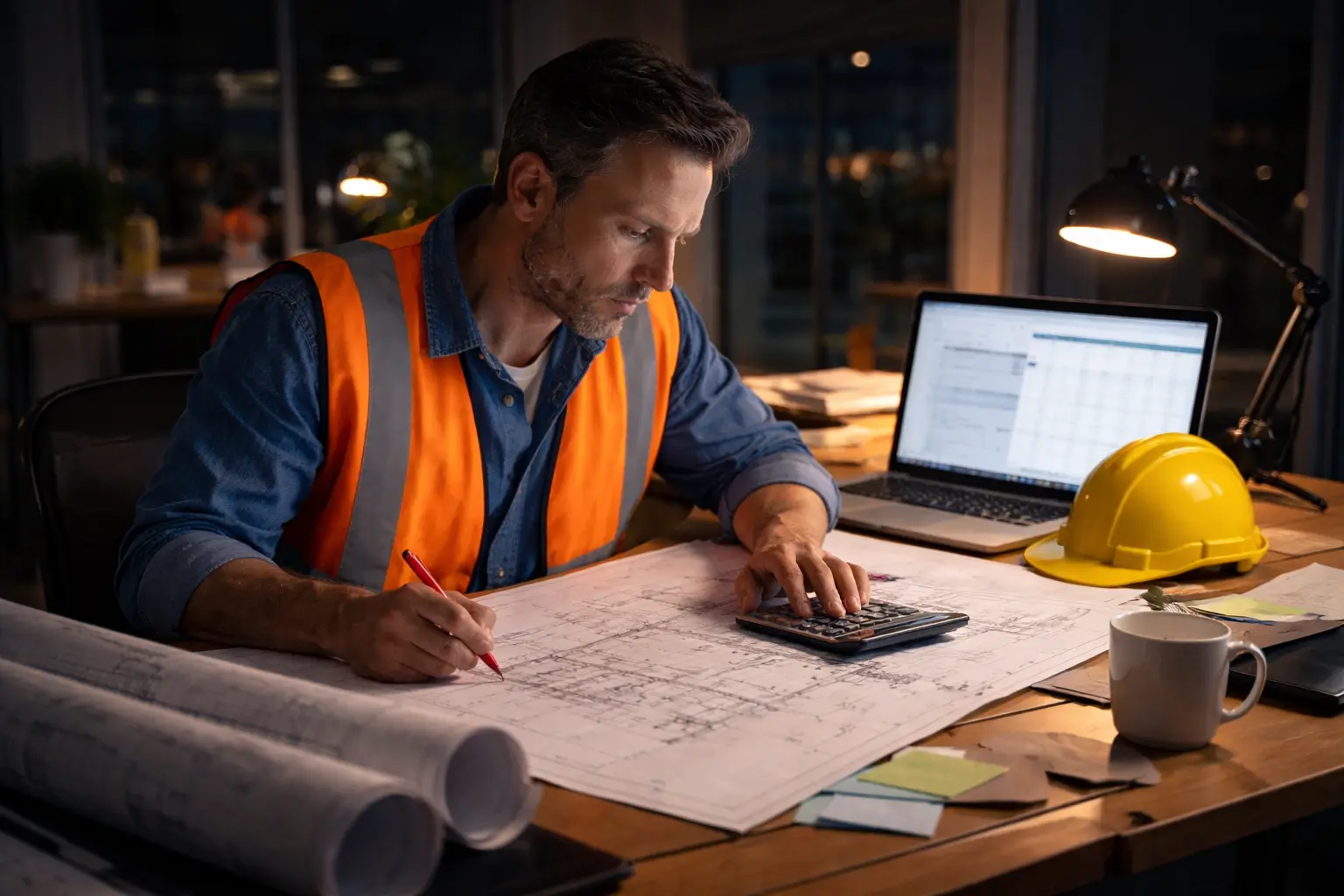
- After long site days
- Late at night
- On weekends
- Under severe deadline pressure
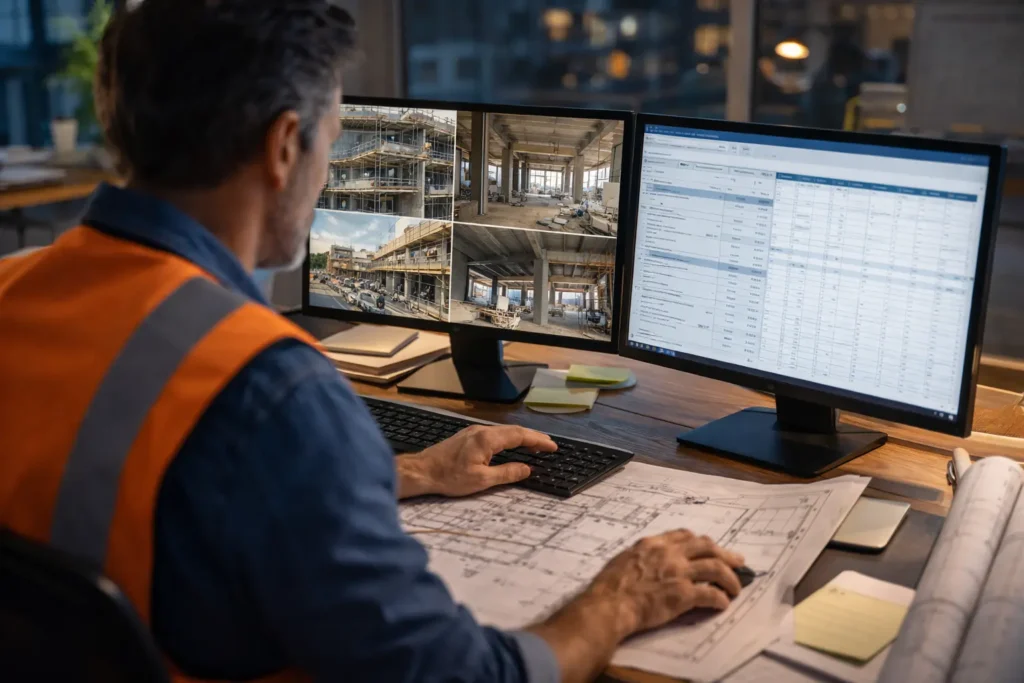
Every hour spent measuring drawings, revising spreadsheets, or chasing pricing is an hour not spent managing projects, supervising crews, or developing client relationships.
Over time, this divided focus reduces effectiveness across the entire business.
Opportunity Loss: The Most Expensive Cost of All
Opportunity loss is where in-house estimating becomes truly expensive.
Most contractors estimating internally can realistically bid:
- 2–3 projects per month
With professional estimating support, many firms increase that to:
- 6–10 bids per month
Fewer bids mean fewer chances to win work. Even highly skilled contractors cannot grow if they simply aren’t bidding often enough. Missed bids never appear in financial statements, but they directly affect long-term revenue and stability.
Burnout and Estimating Fatigue
Estimating requires focus, precision, and patience. When combined with site management and leadership responsibilities, it often leads to burnout.
Burnout results in:
- Rushed takeoffs
- Missed scope items
- Unrealistic labour assumptions
- Reduced quality control
- Increased underbidding risk
These errors don’t just affect one project — they compound across multiple bids.

Accuracy Gaps in In-House Estimating
In-house estimating often lacks:
- Independent QA/QC review
- Updated regional pricing databases
- Consistent productivity benchmarks
- Cross-trade coordination checks
Professional estimating teams work with structured systems and peer review. Solo or overstretched estimators are forced to rely on assumptions and outdated data — increasing risk on every bid.
Fixed Overhead vs Scalable Cost
In-house estimating is a fixed cost. Whether you’re bidding heavily or not at all, the overhead remains.
Outsourced estimating converts estimating into a scalable operational expense:
- Pay only when bidding
- Scale up during peak seasons
- Scale down during slow periods
This flexibility is critical in a cyclical industry like construction.
What Contractors Gain by Outsourcing Estimating
When contractors outsource estimating, they regain:
- Time for leadership and planning
- Higher bid volume
- Better focus on project delivery
- Reduced internal stress
- More predictable estimating costs
Instead of managing estimating capacity, contractors focus on winning and delivering work.

Long-Term Business Impact
Contractors who move away from fully in-house estimating often experience:
- Improved win rates
- More consistent margins
- Reduced underbidding
- Better cash flow stability
- Stronger scalability
Estimating should support growth — not limit it.
Conclusion
In-house estimating is not free. It carries hidden costs in time, labour, accuracy, and missed opportunity. While it may feel economical in the short term, it often restricts growth and increases risk.
Fusion Assist helps US contractors eliminate these hidden costs by providing accurate, scalable estimating services that free internal teams to focus on building profitable projects.
Is in-house construction estimating cheaper than outsourcing?
In-house estimating often appears cheaper but carries hidden costs such as lost time, burnout, and missed bid opportunities.
When should contractors outsource estimating?
Contractors should consider outsourcing when bid volume increases, deadlines tighten, or internal teams become overstretched.
Does outsourcing estimating improve accuracy?
Yes, professional estimating services provide dedicated focus, updated pricing data, and quality control processes.