12May

Top Strategies for Managing Costs in Commercial Projects

Introduction

Managing costs in commercial projects is critical to ensuring profitability and success. With numerous variables and potential pitfalls, a well-thought-out strategy is essential. This comprehensive guide will explore the top strategies for managing costs in commercial projects, providing actionable insights and real-world examples to help you navigate this complex landscape.

The Importance of Cost Management in Commercial Projects

Cost management is not just about cutting corners; it’s about optimizing resources to achieve the best possible outcomes. Effective cost management ensures that projects stay within budget, meet deadlines, and deliver high-quality results. By implementing robust cost management strategies, you can mitigate risks, enhance stakeholder satisfaction, and drive business growth.

Key Strategies for Managing Costs in Commercial Projects
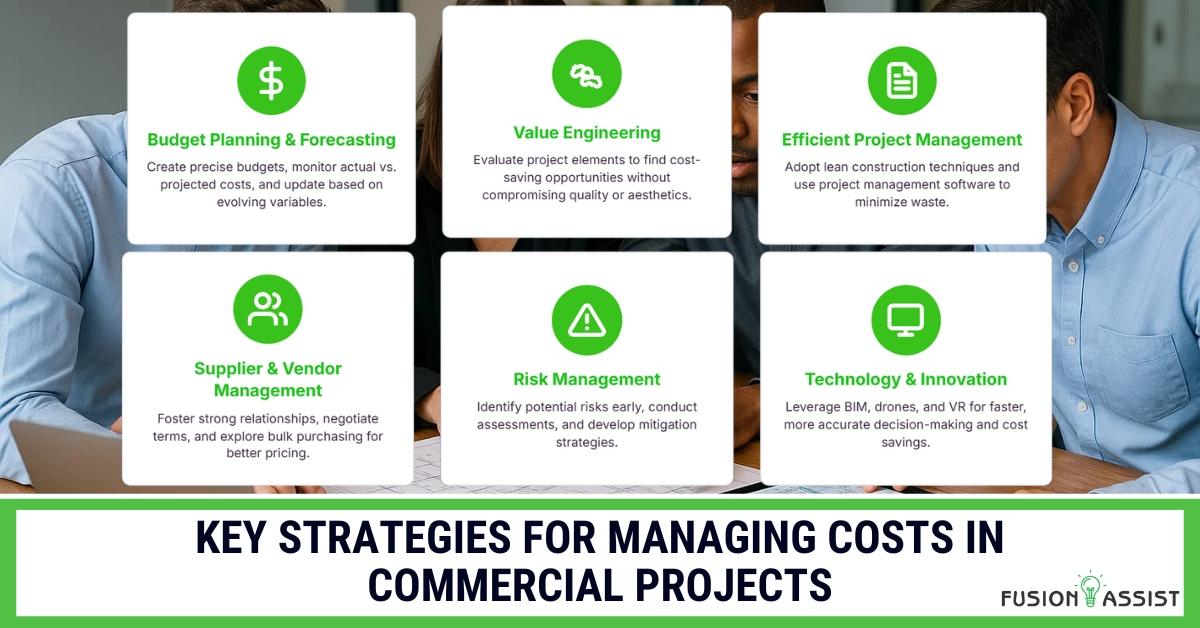
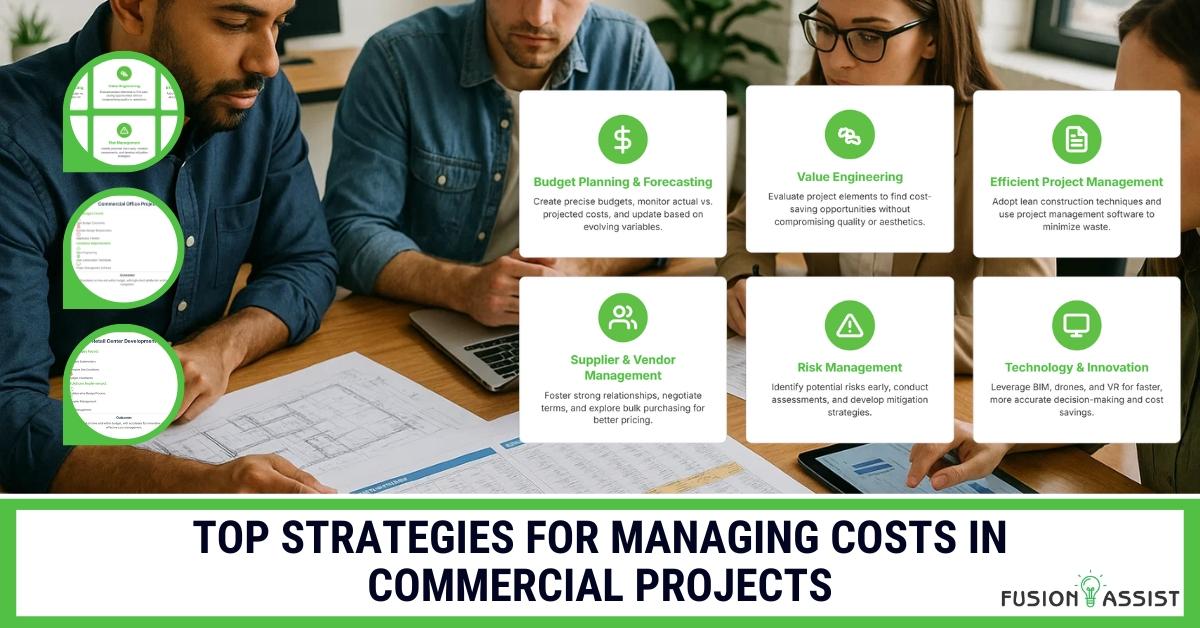
Infographic showing key strategies for cost management in commercial construction projects.

Managing costs in commercial construction requires a holistic approach beyond budgeting alone. It involves continuous planning, leveraging innovative techniques, and maintaining strong partnerships. Below are the top strategies that form the backbone of effective cost management in commercial projects.

1. Budget Planning and Forecasting

Accurate Budgeting

Creating a precise and comprehensive budget is the cornerstone of cost control in any construction project. This begins with a thorough estimation of all expenses, including:

  • Labor costs (salaries, benefits, subcontractors)
  • Material costs (raw materials, prefabricated elements)
  • Equipment and machinery
  • Permits, inspections, and compliance costs
  • Site preparation and utilities
  • Administrative and overhead expenses

Best Practices:

  • Use historical data from past projects to benchmark expenses.
  • Consult with subject matter experts to validate assumptions and cost estimates.
  • Factor in market trends such as material price fluctuations or labor shortages.

Regular Forecasting

A static budget becomes outdated quickly in dynamic project environments. Continuous forecasting allows you to adjust financial expectations in response to evolving project variables.

Key Actions:

  • Monitor actual vs. projected costs weekly or bi-weekly.
  • Update your budget when there are changes in scope, resource availability, or market prices.
  • Use forecasting software to create financial models that simulate different scenarios and outcomes.

2. Value Engineering

Identifying Cost-Saving Opportunities

Value engineering is not about cutting corners but maintaining quality while finding cost-effective solutions. This process evaluates each project element to uncover areas where savings can be realized without compromising functionality or aesthetics.

Benefits of Value Engineering:

  • Improves cost efficiency
  • Encourages innovation and flexibility
  • Increases project value and stakeholder satisfaction

Implementation Steps

  • Conduct a Thorough Analysis: Break down the entire project into its individual systems (e.g., HVAC, electrical, structural). Review the cost and purpose of each.
  • Collaborate with Stakeholders: Involve architects, engineers, contractors, and even vendors. Each party brings unique perspectives that can uncover creative solutions.
  • Evaluate Alternatives: Explore multiple materials, construction methods, and layouts options. Compare the life-cycle costs, not just upfront expenses.

Example: Replacing steel beams with engineered timber may reduce costs and offer sustainable benefits without sacrificing structural integrity.

3. Efficient Project Management

Lean Construction Techniques

Lean construction is a project management philosophy that aims to maximise value while minimizing waste. It emphasizes continuous improvement, efficient workflows, and respect for the workforce.

Lean Techniques Include:

  • Just-in-time material delivery to avoid storage costs and damage
  • Standardizing workflows to reduce delays and confusion
  • Prefabrication to reduce labor time on-site

Project Management Software

Project management tools are essential for organizing complex workflows and keeping the project on schedule and within budget.

Recommended Software:

  • Asana & Trello: Great for task management and team communication.
  • Microsoft Project: Ideal for scheduling and resource allocation.
  • Procore or Buildertrend: Industry-specific tools for construction project tracking and financial control.

Implementation Steps

  • Adopt Lean Principles: Train your team in lean methodologies like Six Sigma or Last Planner System to ensure a culture of efficiency.
  • Use Technology: Utilize software dashboards to visualize project progress, financial health, and resource utilization.
  • Regular Reviews: Hold weekly reviews to assess KPIs and take corrective action early.

4. Supplier and Vendor Management

Building Strong Relationships

Vendors and suppliers play a critical role in managing material and equipment costs. Fostering long-term relationships can result in better pricing, priority service, and collaborative problem-solving.

Strategies to Strengthen Supplier Ties:

  • Maintain open communication about project timelines and expectations.
  • Provide timely payments to foster goodwill.
  • Involve suppliers in planning stages for more accurate lead times and cost forecasting.

Implementation Steps

  1. Negotiate Terms: Focus on price, lead times, payment flexibility, and penalties for delays.
  2. Bulk Purchasing: Consolidate orders across projects to qualify for volume discounts.
  3. Long-Term Partnerships: Establish framework agreements with dependable vendors to ensure consistency in price stability and supply chain.

5. Risk Management

Identifying Potential Risks

Early risk identification prevents future budget overruns and project delays. Risks may include labor shortages, equipment failure, weather disruptions, or unexpected site conditions.

Risk Categories:

  • Financial: Cash flow, inflation, interest rates
  • Operational: Equipment breakdown, supply chain delays
  • Legal: Permits, contract disputes, compliance issues

Mitigation Strategies

Proper risk mitigation minimizes the likelihood and impact of negative events.

Examples of Risk Mitigation:

  • Purchasing builder’s insurance and liability coverage
  • Creating backup vendor lists for critical supplies
  • Establishing dispute resolution protocols in contracts

Implementation Steps

  • Conduct Risk Assessments: Use tools like SWOT analysis or Monte Carlo simulations to assess probability and impact.
  • Develop Contingency Plans: Allocate a percentage of the budget as a contingency fund for high-risk items.
  • Implement Quality Control: Set up robust inspection processes to reduce rework and maintain construction standards.

6. Technology and Innovation

Leveraging Technology

Technology is revolutionizing how commercial construction projects are executed. From 3D modeling to drone surveys, these tools enable faster, more accurate decision-making and cost savings.

Key Technologies:

  • Building Information Modeling (BIM): Detects design conflicts before construction begins.
  • Drones: Provide real-time aerial views for site inspections and progress tracking.
  • Virtual Reality (VR): Allows stakeholders to visualize spaces and identify design flaws early.

Implementation Steps

  • Adopt BIM: Incorporate BIM to centralize project data and improve coordination between architects, engineers, and contractors.
  • Use Drones for Surveys: Save time and labor costs by conducting faster, more accurate site assessments.
  • Virtual Reality Design Reviews: Host immersive design sessions with clients and teams to streamline approvals and avoid late-stage changes.

By executing these expanded and actionable strategies, construction professionals can manage costs effectively and deliver higher-quality results that drive long-term project success. Let me know if you’d like these formatted for SEO or turned into downloadable content.

Real-World Examples and Case Studies

Case Study: Fusion Assist’s Commercial Office Project
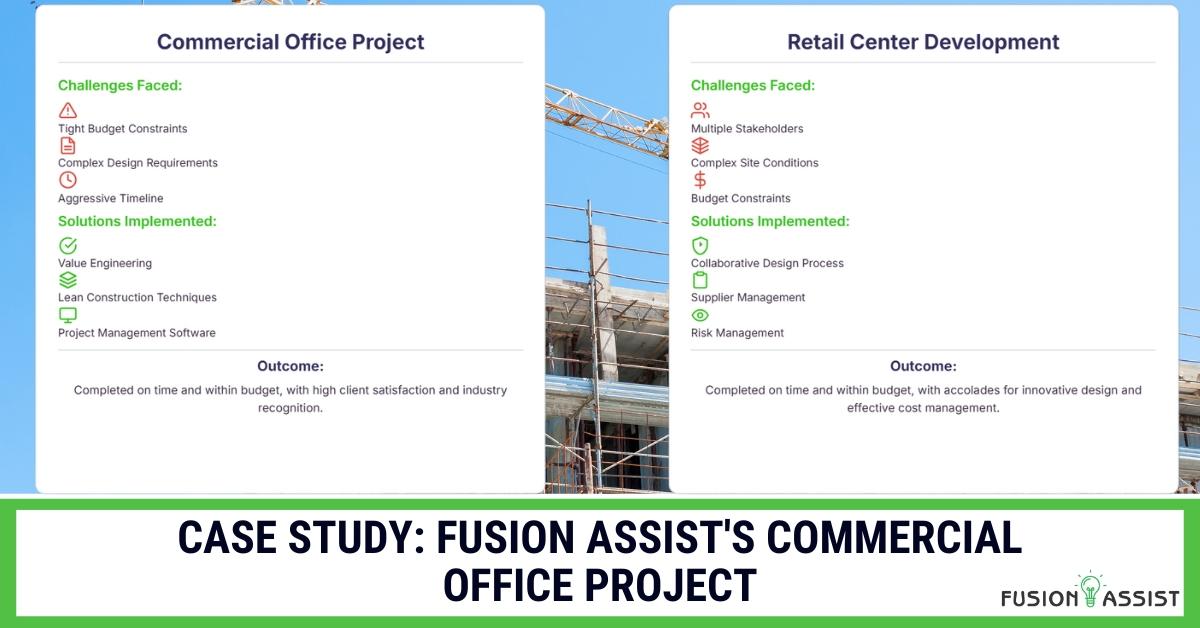
Case studies demonstrating Fusion Assist's cost management in commercial office and retail projects.

Project Overview

Fusion Assist was contracted to build a new commercial office building for a tech company. The project involved a complex design with high-end finishes and advanced technological infrastructure.

Challenges Faced

  • Tight Budget Constraints: The client had a strict budget, making cost management critical.
  • Complex Design Requirements: The project required specialized materials and advanced construction techniques.
  • Aggressive Timeline: The project had to be completed within 12 months to meet the client’s occupancy schedule.

Solutions Implemented

  • Value Engineering: Fusion Assist conducted a value engineering exercise to identify cost-saving opportunities. They proposed alternative materials and design modifications that reduced costs without compromising quality.
  • Lean Construction Techniques: They implemented lean construction techniques to optimize resource allocation and reduce waste. This included just-in-time material delivery and efficient workflow management.
  • Project Management Software: Utilizing project management software, they tracked progress in real-time, identified potential delays, and took corrective action promptly.

Outcome

The project was completed on time and within budget. The client was highly satisfied with the results, and the project received industry recognition for its innovative approach and cost management strategies.

Case Study: Fusion Assist’s Retail Center Development

Project Overview

Fusion Assist was tasked with developing a new retail centre. The project involved multiple stakeholders, complex site conditions, and a tight budget.

Challenges Faced

  • Multiple Stakeholders: Coordinating with multiple stakeholders, including retailers, suppliers, and local authorities, was a significant challenge.
  • Complex Site Conditions: The site had challenging terrain and required extensive grading and stabilization.
  • Budget Constraints: The project had a strict budget, making cost management essential.

Solutions Implemented

  • Collaborative Design Process: Fusion Assist fostered a collaborative environment between architects, engineers, and stakeholders. Regular meetings and open communication channels helped align all parties and identify potential issues early.
  • Supplier Management: They developed strong relationships with suppliers, negotiating favorable terms and securing bulk purchase discounts.
  • Risk Management: A thorough risk assessment identified potential risks, and mitigation strategies were developed to address them. This included purchasing insurance and implementing quality control measures.

Outcome

The retail center was completed on time and within budget. The project received accolades for its innovative design and effective cost management strategies.

FAQs

How can I reduce costs without compromising quality?

Value Engineering and Lean Construction Techniques

Implement value engineering to identify cost-saving opportunities without compromising quality. Utilize lean construction techniques to optimize resource allocation and reduce waste.

What role does project management software play in cost management?

Tracking Progress and Identifying Delays

Project management software helps track progress in real-time, manage resources efficiently, and identify potential delays. This proactive approach allows you to take corrective action promptly and avoid cost overruns.

How can I negotiate better terms with suppliers?

Develop Strong Relationships and Explore Bulk Purchasing

Develop strong relationships with suppliers and explore bulk purchasing options to secure better pricing and service. Long-term partnerships can also lead to additional benefits such as timely deliveries and priority support.

What are the benefits of using Building Information Modeling (BIM)?

Enhanced Efficiency and Decision-Making

BIM enhances efficiency by identifying design conflicts early, optimizing construction sequences, and improving decision-making. This results in reduced rework and cost savings.

How can I manage risks effectively in a commercial project?

Conduct Thorough Risk Assessments and Develop Mitigation Strategies

Conduct a thorough risk assessment to identify potential risks and develop mitigation strategies. Allocate contingency funds where necessary and implement quality control measures to prevent defects and rework.

Conclusion

Managing costs in commercial projects is a multifaceted challenge that requires a strategic and proactive approach. By implementing robust cost management strategies, leveraging technology, and fostering collaboration, you can optimize resources, mitigate risks, and deliver high-quality results. Whether you are a project manager, contractor, or stakeholder, understanding and applying these strategies is essential for achieving project success.

Contact Fusion Assist to streamline your commercial project costs through expert planning, innovation, and proven results
10May

Sustainable Materials for Residential Construction: A Modern Guide

Introduction

The global push toward sustainability has transformed the construction landscape, especially in the residential sector, where homeowners increasingly demand eco-friendly materials that reduce carbon footprints, lower energy bills, and create healthier living environments. Sustainable residential projects conserve natural resources and elevate property value and marketability.

Today’s eco-conscious consumers are more informed, placing greater pressure on developers, architects, and contractors to integrate green practices. The growth of programs like LEED (Leadership in Energy and Environmental Design) and WELL Certification shows the industry’s evolution toward transparency, accountability, and performance. This article explores today’s most effective eco-friendly materials, explains their benefits, and illustrates real-world applications through detailed case studies. By understanding these options, builders, architects, and homeowners can make informed choices that align with green-building best practices and long-term cost savings.

Understanding Eco-Friendly Materials

Defining Eco-Friendly Construction Materials

Eco-friendly materials—sometimes called green building materials—are products whose sourcing, manufacturing, usage, or disposal minimizes environmental impact. They typically exhibit one or more of the following characteristics:

  • Low embodied energy or carbon footprint
  • High recycled or rapidly renewable content
  • Non-toxic, low-VOC (volatile organic compound) emissions
  • Durability that extends service life and reduces replacement frequency
  • Ability to improve indoor environmental quality or energy efficiency

Why Choose Sustainable Materials for Residential Construction?

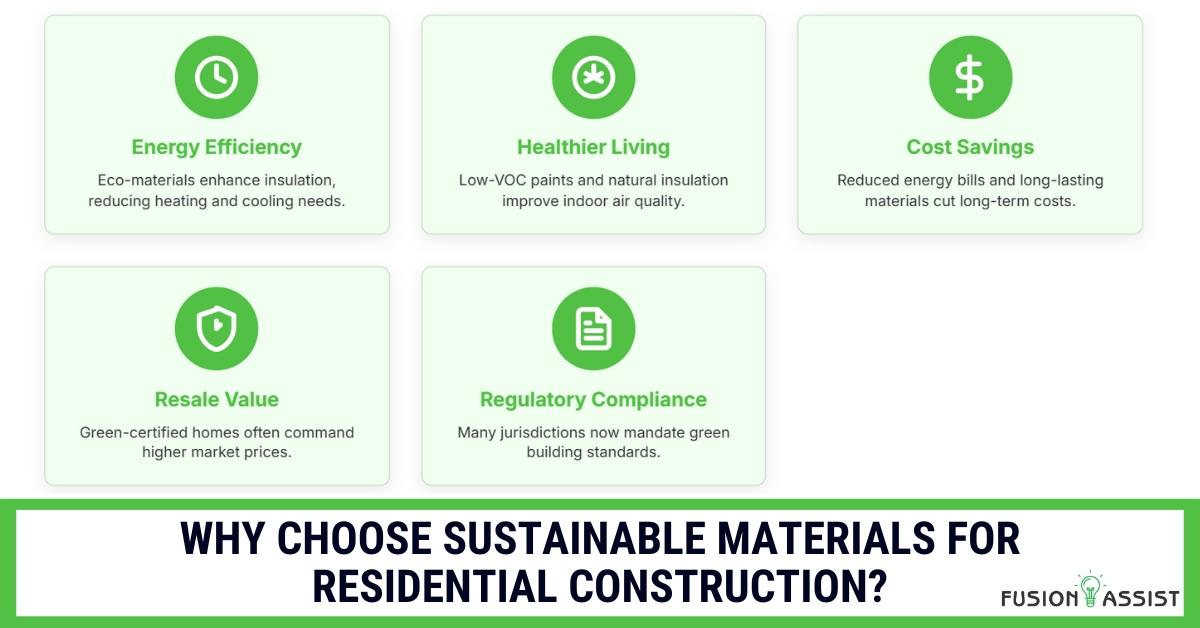
Infographic showing benefits of sustainable materials for residential construction.

The choice of building materials significantly impacts a home’s environmental footprint. Here’s why sustainable options are gaining traction:

  • Energy Efficiency: Many eco-materials enhance insulation, reducing heating and cooling needs
  • Healthier Living: Low-VOC paints and natural insulation improve indoor air quality
  • Cost Savings: Reduced energy bills and long-lasting materials cut long-term costs
  • Resale Value: Green-certified homes often command higher market prices
  • Regulatory Compliance: Many jurisdictions now mandate green building standards

Key Benefits of Using Sustainable Materials

  • Reduced environmental impact: Lower greenhouse-gas emissions and less waste generation throughout the product lifecycle.
  • Improved energy performance: Many green materials enhance insulation or thermal mass, helping cut utility costs.
  • Healthier living spaces: Low-VOC products improve indoor air quality, reducing allergies and respiratory issues.
  • Enhanced property value: Buyers increasingly favor homes built with sustainable materials, boosting demand and resale potential.
  • Compliance with green certifications: Programs such as LEED, WELL, and Passive House reward projects that prioritize eco-friendly products.

Top Sustainable Materials for Residential Construction

1. Bamboo

Overview

Bamboo is one of the fastest-growing plants, maturing in 3–5 years. It is a renewable, durable, and versatile alternative to traditional hardwoods.

Applications

  • Flooring
  • Wall paneling
  • Furniture
  • Structural framing (engineered bamboo)

Advantages

  • High tensile strength
  • Pest-resistant (when treated)
  • Renewable and biodegradable

Limitations

  • Requires chemical treatment to prevent rot and pests
  • Limited local availability in some regions

2. Recycled Steel

Overview

Recycled steel framing is strong, long-lasting, and reduces the demand for virgin ore extraction.

Applications

  • Framing and beams
  • Roofing panels
  • Doors and window reinforcements

Advantages

  • 100% recyclable
  • Fire- and pest-resistant
  • Extremely durable

Limitations

  • High embodied energy if not regionally sourced
  • Requires specialized labor for installation

3. Straw Bales

Overview

Straw bales from agricultural by-products are excellent insulators and form thick, breathable walls.

Applications

  • Load-bearing and infill wall systems
  • Natural insulation

Advantages

  • Superior insulation (R-30 to R-35)
  • Inexpensive and renewable
  • Biodegradable

Limitations

  • Susceptible to moisture without proper sealing
  • Not suitable in high-humidity zones

4. Reclaimed Wood

Overview

Reclaimed or salvaged wood is harvested from old buildings, barns, or fallen trees, reducing demand for virgin Timber.

Applications

  • Flooring
  • Beams and trusses
  • Cabinetry and accents

Advantages

  • Unique aesthetics
  • Carbon-neutral or carbon-negative
  • Reduces landfill waste

Limitations

  • May require de-nailing and re-treatment
  • Inconsistent availability

5. Insulated Concrete Forms (ICFs)

Overview

ICFs are polystyrene foam blocks filled with concrete, providing excellent insulation and strength.

Applications

  • Exterior walls
  • Basements
  • Foundation systems

Advantages

  • High thermal performance
  • Disaster-resistant
  • Soundproof

Limitations

  • The initial cost is higher
  • Complex to modify post-construction

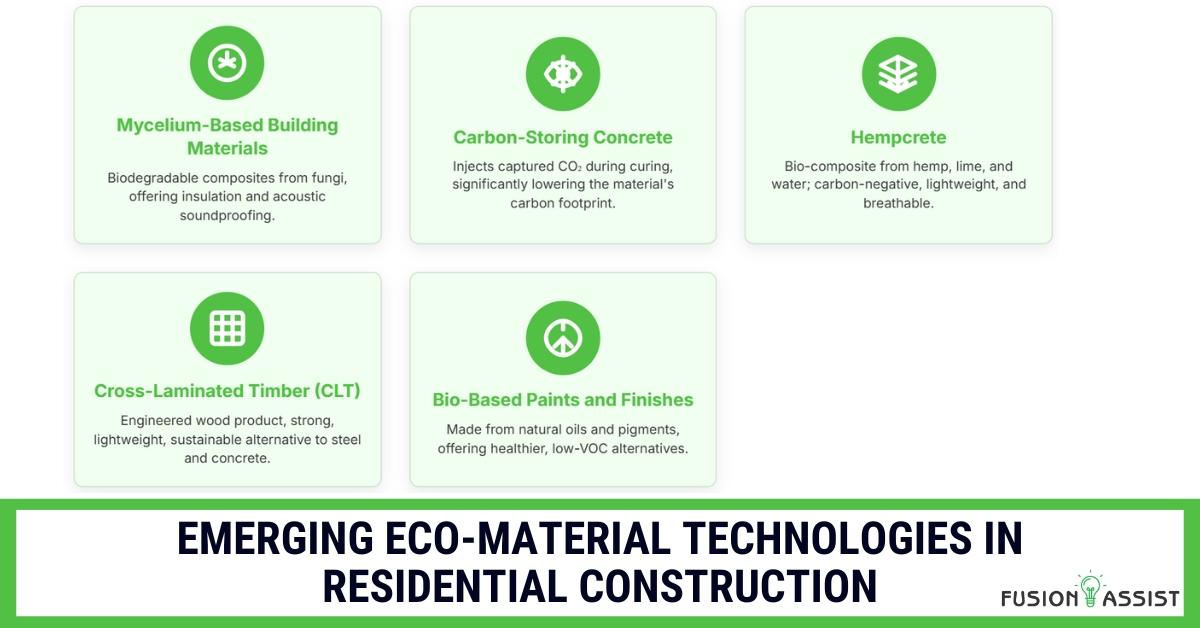
Emerging Eco-Material Technologies in Residential Construction

An infographic presenting five key benefits of choosing sustainable materials for residential construction: Energy Efficiency (reducing heating/cooling needs), Healthier Living (improving indoor air quality), Cost Savings (reduced energy bills, long-lasting materials), Resale Value (higher market prices for green-certified homes), and Regulatory Compliance (meeting green building standards). Each benefit is accompanied by a relevant icon, visually summarizing the advantages discussed in the article.

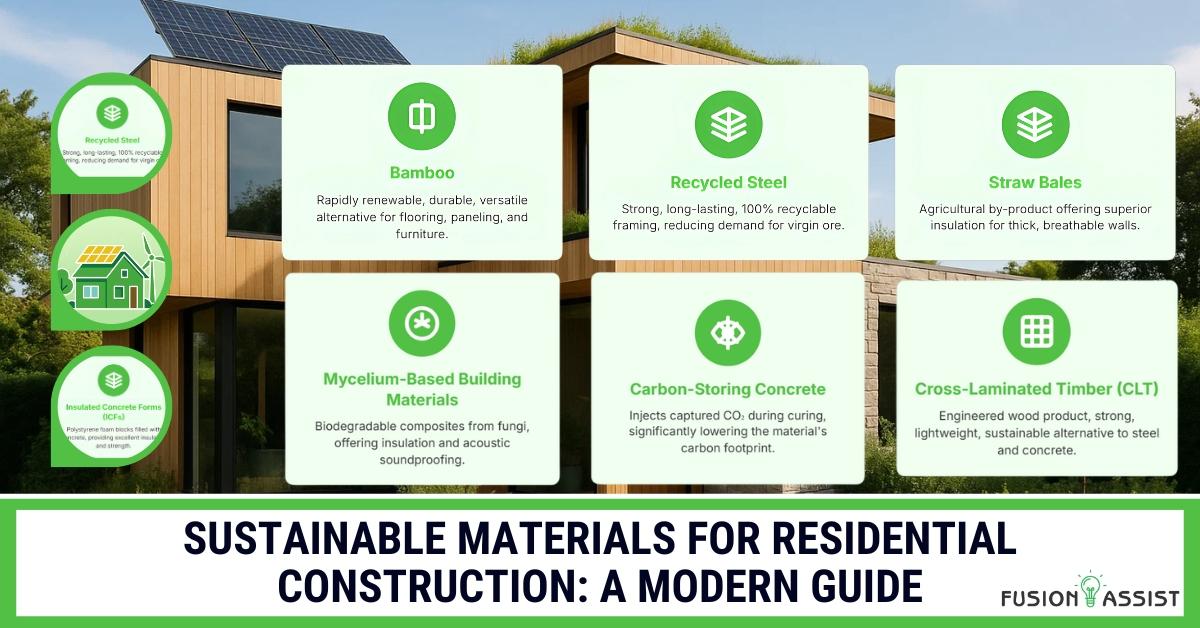
1. Mycelium-Based Building Materials

Overview

Mycelium-based materials are created from fungi’s root structures. These composites are biodegradable and provide excellent thermal insulation, making them a promising sustainable alternative for construction.

Applications

  • Insulation panels
  • Acoustic soundproofing
  • Biodegradable furniture

Advantages

  • Fire-retardant and lightweight
  • Grown on agricultural waste, reducing environmental impact
  • Completely compostable at the end of their lifecycle

Limitations

  • Not suitable for load-bearing structural components
  • Sensitive to moisture, requiring careful protection
  • Commercial availability is still limited, making sourcing difficult

2. Carbon-Storing Concrete (e.g., CarbonCure)

Overview

This innovative concrete technology involves injecting captured carbon dioxide during the curing process. The CO₂ chemically binds within the concrete, effectively reducing the material’s overall carbon footprint.

Applications

  • Foundations and footings
  • Driveways and sidewalks
  • Structural concrete panels

Advantages

  • Significantly lowers CO₂ emissions compared to traditional concrete
  • Compatible with existing concrete production and construction methods
  • Maintains the same strength and durability as standard concrete

Limitations

  • Higher upfront cost compared to conventional concrete
  • Regional supply is limited, potentially affecting accessibility

3. Hempcrete

Overview

Hempcrete is a bio-composite material made from hemp shives, lime, and water. It is lightweight and breathable and naturally sequesters carbon, improving indoor air quality and energy efficiency.

Applications

  • Non-load-bearing wall infill
  • Thermal and moisture insulation

Advantages

  • Carbon-negative, locking CO₂ within the material
  • Regulates indoor humidity levels, reducing mold risk
  • Naturally resistant to fire and pests

Limitations

  • Cannot be used for structural load-bearing purposes
  • Requires thicker walls compared to conventional materials
  • May face regulatory hurdles in some regions due to unfamiliarity

4. Cross-Laminated Timber (CLT)

Overview

Cross-Laminated Timber is an engineered wood product made by layering timber panels at right angles and bonding them with adhesives. This technique produces strong, lightweight panels that are a sustainable alternative to steel and concrete in construction.

Applications

  • Flooring systems
  • Wall panels
  • Roof structures

Advantages

  • Prefabricated panels reduce on-site construction time
  • Renewable timber source with a smaller carbon footprint
  • High strength-to-weight ratio allows for innovative architectural designs

Limitations

  • Requires fire-retardant treatments for safety compliance
  • Generally more expensive than traditional timber framing

5. Bio-Based Paints and Finishes

Overview

Bio-based paints and finishes are made from natural oils, resins, and pigments. They offer a healthier alternative to traditional paints by reducing volatile organic compounds (VOCs), which improve indoor air quality.

Applications

  • Interior and exterior wall coatings
  • Furniture finishes

Advantages

  • Lower chemical emissions compared to synthetic paints
  • Derived from renewable, natural sources
  • Contributes to healthier indoor environments

Limitations

  • Limited range of available colors and finishes
  • Slightly less durable than some synthetic options, requiring more frequent maintenance

Summary Table: Pros and Cons of Emerging Eco-Materials

MaterialKey BenefitProsCons
MyceliumNatural InsulationBiodegradable, non-toxic, thermal insulationNot structural, moisture-sensitive
Carbon-Storing ConcreteEmission ReductionStrong, lowers CO₂ footprintHigher cost, limited availability
HempcreteBreathabilityCarbon-negative, mold-resistantThick walls are needed, and regulatory issues
Cross-Laminated TimberStructural SustainabilityPrefab speed, eco-friendly TimberFire & pest treatment required
Bio-Based PaintsHealthy InteriorsLow-VOC, renewableLess durable, fewer shades

Selecting the Right Material: Actionable Insights

  1. Match Materials to Climate:

    • Use ICFs in cold climates for airtight insulation.

    • In humid zones, hempcrete’s breathability and bamboo’s moisture resistance are beneficial.

  2. Balance Upfront Costs with ROI: CLT or recycled steel may be costlier initially, but offer lower long-term maintenance and energy bills.

  3. Insist on Certifications: Look for FSC, EPD, Cradle to Cradle, and GREENGUARD credentials.

  4. Prioritize Local Sourcing: Reduces emissions from transport and supports regional supply chains.

Case Studies: Eco-Friendly Materials in Action

Solar-Powered Bamboo Residence, Bali

Materials Used

This luxury villa incorporates engineered bamboo trusses and beams as the primary structural framework. Bamboo was selected for its rapid renewability and impressive strength-to-weight ratio. The roof features a green roof system planted with native sedums, providing natural insulation and cooling. Low-VOC paints and finishes were applied throughout the interiors to ensure a healthy indoor environment for occupants and guests.

Outcomes

  • Combining bamboo’s natural thermal properties, strategic shading, and the green roof led to a 45% reduction in overall energy consumption compared to similar conventional villas. This significantly lowers utility bills and has an environmental impact.
  • The lightweight and prefabricated bamboo components allowed the construction team to complete the build 20% faster than traditional hardwood framing methods, reducing labor costs and site disturbance.
  • The villa received a Gold rating from the Green Building Council Indonesia (GBCI), an internationally recognized sustainability certification. This accolade contributed to an 18% increase in rental value, demonstrating the market’s growing appreciation for eco-friendly design.

Net-Zero Hempcrete Cottage, Colorado

Materials Used

This 1,600-square-foot starter home employs hempcrete walls—an innovative, carbon-negative material composed of hemp hurds, lime, and water—as the primary insulation and infill between wood framing. The foundation is built with insulated concrete forms (ICFs) for superior airtightness and thermal performance. The roof supports a photovoltaic solar panel array sized to cover 100% of the home’s electricity needs.

Outcomes

  • The home successfully achieved net-zero energy status in its first year, generating as much renewable electricity on-site as it consumes, minimizing utility costs and carbon emissions.
  • Thanks to hempcrete’s natural vapor permeability and moisture-regulating properties, indoor humidity consistently remained within a comfortable 40-50% range without relying on mechanical humidification or dehumidification systems. This resulted in excellent indoor air quality and reduced risk of mold growth.
  • Real estate appraisers valued the property at 12% higher than comparable homes that use traditional building materials, reflecting the premium buyers place on sustainable, energy-efficient homes with proven environmental benefits.

Recycled-Steel Modular Townhomes, Texas

Materials Used

In an urban infill project in Austin, six modular townhomes were built using recycled steel framing, which offers high durability and reduces embodied carbon by up to 90% compared to virgin steel. The roofs feature high-reflectance metal panels to combat urban heat island effects. Interior finishes include reclaimed wood stair treads and recycled glass countertops, combining aesthetic appeal with sustainability.

Outcomes

  • The modular construction approach combined with recycled materials helped reduce construction waste by 42% compared to conventional stick-built homes, significantly lowering landfill contributions and material expenses.
  • The project earned LEED Silver certification, highlighting its energy efficiency, reduced water use, and sustainable material selections. This certification attracted environmentally conscious buyers willing to pay a premium.
  • The townhomes sold at an average 7% premium over traditional homes in the area, demonstrating strong market demand for sustainably constructed housing. The inherent termite resistance of steel framing also lowered anticipated long-term maintenance costs for owners.

Conclusion

Integrating eco-friendly materials into sustainable residential projects delivers far-reaching benefits: environmental responsibility, long-term cost reductions, healthier indoor environments, and enhanced property value. From rapidly renewable bamboo and carbon-negative hempcrete to high-performance ICFs and revolutionary materials like mycelium and carbon-storing concrete, today’s material palette empowers green construction without compromising design or performance.

Ready to elevate your next residential project with eco-friendly materials that cut carbon and boost value?
Contact Fusion Assist sustainable-building specialists today to explore tailored material strategies, cost analyses, and supply-chain solutions that bring your green vision to life—on schedule, on budget, and with lasting impact.

FAQs

Which eco-friendly material offers the best insulation for residential walls?

ICFs and hempcrete both offer strong thermal performance. ICFs provide high airtightness, while hempcrete adds breathability and carbon sequestration.

Are eco-friendly materials more expensive than traditional ones?

Some have higher upfront costs (like CLT or recycled steel), but often deliver lifecycle savings through reduced energy use and maintenance.

How can homeowners verify material sustainability?

Look for FSC, Cradle to Cradle, GREENGUARD, and EPD certifications. Use transparent, third-party-verified sources.

Do eco-materials compromise structural integrity?

When properly designed, options like bamboo, CLT, and recycled steel meet or exceed structural standards.

Can these materials help earn green certifications?

Yes. Using eco-materials earns credits toward LEED, WELL, Passive House, and other certifications, increasing a home’s long-term value.

20Apr

Precision Estimation for Successful Construction Projects

Accurate estimation is the primary requirement for running practical construction projects. The process requires precise material, labor, and time cost forecasting to develop an extensive execution guide spanning the entire project duration. Precise estimation enables construction firms and property developers to execute projects within expected timelines and budgets while preventing unexpected financial matters. This article delves into the importance of precision estimation, the consequences of inaccurate estimates, and the tools and techniques used to achieve precise estimates.

Understanding Precision Estimation

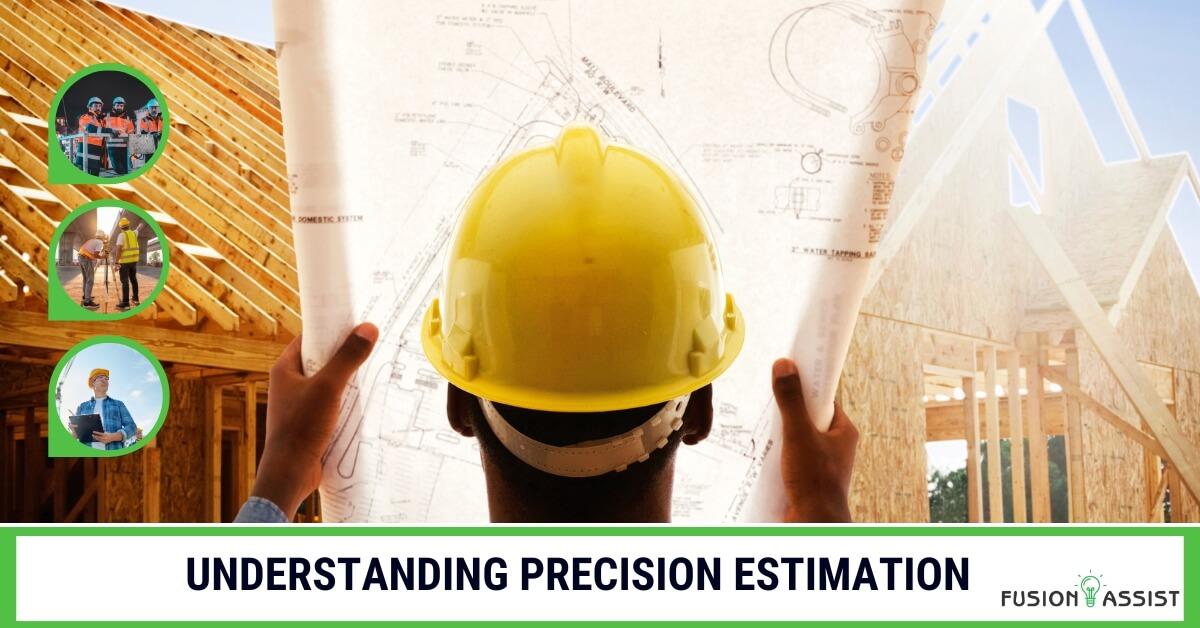
Construction planner reviewing a project site estimate with material lists, labor schedules, and cost charts

What is Precision Estimation?

Precision estimation involves accurately predicting construction project costs, resource requirements, and duration. This concept includes four vital elements: material expenditures, labor fees, equipment specifications, and overhead expenses. Precision estimation is vital because it establishes a unified direction that guides project managers, stakeholders, and their workforce.

The Process of Precision Estimation

The process starts by following multiple steps for precision estimation.

  1. Initial Assessment: The assessment stage involves a complete analysis of project goals, requirements, and scope definition.
  2. Data Collection: The second step involves collecting data on materials, labor rates, equipment costs, and all other necessary information.
  3. Analysis and Calculation: The collected data undergoes analysis through specialized software that enables precise calculations
  4. Review and Adjustment: Regular assessment of estimates for monitoring project scope changes and market dynamics, as well as other modifying variables.

Why Precision Estimation is Vital for Your Construction Project

1. Managing Project Costs

A project needs accurate budget cost estimation to handle finances properly. Precision estimation helps in:

  • Accurate Forecasting of Material Costs: Material costs remain accurate in forecasting by precisely identifying the required materials alongside their present market prices through precision estimation.
  • Labor Cost Estimation: Planning workforce requirements becomes possible, along with labor shortage prevention, while avoiding staff excess through precise labor cost predictions.
  • Equipment and Overhead Costs: Detailed estimates of overhead and equipment rental expenses prevent any costs from missing out in the project budget.

2. Managing Project Timelines

Time management plays an identical role in the success of construction projects. Precision estimation helps in:

  • Importance of Timely Completion: Accurate Project estimates help builders finish work according to schedule, fulfill deadlines, and prevent time-consuming delays.
  • Impact of Delays on Project Costs: Delays create higher labor costs with material price changes, which result in increased overhead expenses. Precision estimation helps organizations reduce these potential threats.

3. Risk Mitigation

Precision estimation also plays a crucial role in risk management:

  • Identifying Potential Risks Early: Precision estimation allows for proactive problem-solving and contingency planning by identifying potential issues early.
  • Contingency Planning: Project duration stability results from precise estimates, which create extra funds for unforeseen expenses and project delay situations.

Consequences of Inaccurate Estimation

1. Cost Overruns

The use of incorrect estimates creates a massive increase in the financial cost of projects.

  • Causes of Cost Overruns: Three major contributors to cost overruns in construction projects are inadequate material cost forecasting, labor shortages, and unpredictable site conditions.
  • Impact on Budget and Financial Health: Cost overruns generate adverse financial effects that produce legal problems and harm organizational reputation and budgetary health.

2. Time Delays

Inaccurate estimates lead to prolonged timelines, which become one of the most critical adverse effects.

  • Causes of Time Delays: The main contributors to time delays include material shortage, labor disputes, and equipment breakdowns.
  • Impact on Project Schedule and Deadlines: Project delays caused by inaccurate estimates result in failed project deadlines, which produce higher labor costs and additional overhead maintenance expenses.

3. Legal and Reputational Risks

Inadequate estimation accuracy produces legal issues as well as reputation damage due to various reasons:

  • Legal Implications of Inaccurate Estimates: Professional estimates that prove incorrect may trigger legal disputes involving clients, subcontractors, and suppliers.
  • Damage to Company Reputation: Repeated problems with cost overruns, together with delays, permanently damage customers’ perceptions of the company, which results in fewer opportunities for business in the future.

Benefits of Precision Estimation

1. Cost Control and Management

Accurate precision estimation provides various advantages that improve cost control and management functions.

  • Preventing Cost Overruns: Implementing accurate cost estimates minimizes cost overruns because every expense gets properly documented.
  • Efficient Resource Allocation: Strategic resource optimization becomes possible through accurate estimates, decreasing waste and improving general efficiency.

2. Time Management

The estimation process with high precision leads to better time management.

  • Preventing Time Delays: Accurate project estimates enable proper task sequencing and resource distribution, which prevents time-based project delays.
  • Effective Task Sequencing and Scheduling: Detailed timelines enable positive task ordering that maintains project speed because tasks are completed in their proper sequence.

3. Improved Decision-Making

Project planning becomes more transparent since precision estimation brings clarity, which allows stakeholders to make well-informed decisions.

  • Transparency and Clarity in Project Planning: Project planning becomes clearer and more transparent when accurate cost and time predictions are made, allowing stakeholders to make well-informed choices.
  • Informed Decision-Making for Stakeholders: Through detailed estimates, stakeholders evaluate project alterations clearly, which helps them choose better options.

Techniques and Tools for Precision Estimation

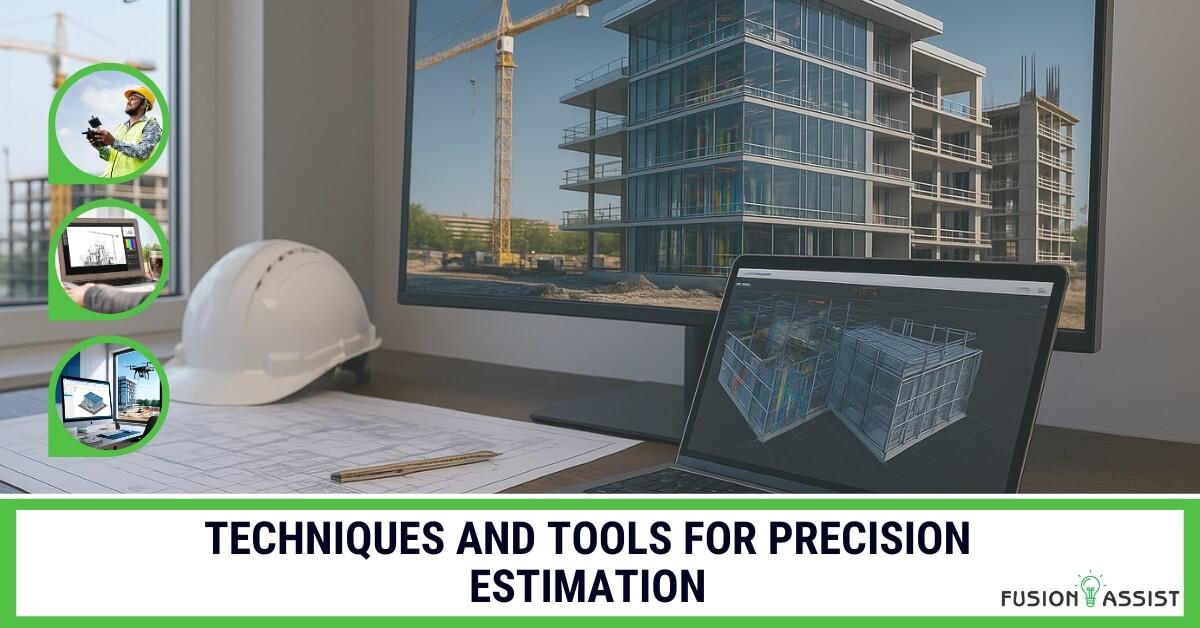
Construction estimation tools and techniques. Construction team using estimation software and BIM on laptops and tablets, with data charts and 3D models on screen.

1. Utilizing the Right Tools

The construction industry depends on sophisticated tools and calculation methods for accurate estimates.

2. Construction Estimation Software

  • Features and Benefits: Modern estimation software performs automatic calculations, reducing human mistakes and speeding up estimation work.
  • Real-Time Adjustments: Software systems enable real-time updates that maintain the most accurate market data and project alterations in current estimates.

3. Building Information Modeling (BIM)

  • Digital Representation and Visualization: Project understanding and communication benefit from Building Information Modeling because it offers detailed digital project models.
  • Integration of Project Data: BIM is a platform that merges project information into one location, thus minimizing data errors.

4. Estimating Strategies

  • Historical Data Analysis: It depends on previous project data to forecast potential cost overruns and project delays.
  • Unit Cost Estimation: The unit cost estimation method enables precise predictions of production unit expenses, ensuring efficient operations.
  • Parametric Estimating: The method of parametric estimating enables the prediction of enormous project costs by applying statistical models between variables and historical data interactions.
  • Combining Techniques for Maximum Accuracy: Multiple estimation methods should be utilized with expert insights to guarantee maximum accuracy in identifying all project requirements during the estimation period.

Advanced Techniques and Technologies

1. Artificial Intelligence and Machine Learning

  • Predictive Analytics: AI algorithms analyze historical data to predict future costs, improving the accuracy of estimates.
  • Risk Assessment: ML models process data to detect potential risks, which they use to propose risk management strategies.
  • Automated Data Processing: Automating extensive data processing using AI technology minimizes both time requirements and human labor needed for estimation tasks.

2. Drones and 3D Scanning

  • Accurate Site Surveys: Drones collect precise site survey data through their high-definition recording systems of work sites.
  • 3D Models for Detailed Measurements: 3D scanning allows for detailed assessments because it develops truthful digital copies of existing structures and sites for accurate measurement.
  • Real-Time Data for Quick Adjustments: These technologies supply real-time data through which estimates get updated swiftly.

Case Studies By Fusion Assist

Case Study 1: Commercial Building Developer

Background

A commercial building developer started a major construction project within an energetic urban district. The development involved residential properties, office spaces, and a shopping center as part of a high-quality construction project in an ideal location. The project demanded immediate completion within a short duration, while the client needed to handle substantial financial elements and strict budgetary constraints.

Challenges

Accurate cost and timeline predictions were the main challenges to overcome for this big and complicated project. The client needed to precisely estimate material costs, labor schedules, and equipment requirements to avoid financial overruns and project delays.

Approach

The team used precision estimation methods based on construction estimation software and Building Information Modeling (BIM) tools. These technological tools enabled the team to achieve precise forecasting results regarding material expenses, labor resources, and equipment rentals. Historical analyses by the project manager enabled the prediction of potential cost risks to deliver budget estimates with greater accuracy.

Results

  • Accurate labor estimates combined with material estimates maintained budget control, which prevented typical budget overruns from occurring.
  • Real-time tracking and precise timeline estimates allowed project scheduling, leading to meeting the deadlines.
  • The project maintained its course because proactive contingency measures were developed when project leaders detected potential risks, such as workforce shortages and delivery supply issues.

Case Study 2: Residential Housing Development

Background

A residential housing developer received an order to build 150 houses in a suburban area for a neighborhood development. The developer operated under a time-constrained project budget yet encountered potential difficulties due to unanticipated material price rises and worker shortages.

Challenges

The main challenge in executing this big residential development project included managing the constraints of budget and schedule, analyzing market price changes, and addressing workforce availability issues. Unplanned delays, together with unexpected cost growth, would lead to adverse financial consequences for the project.

Approach

The project team adopted parametric estimating methods through statistical models combined with historical project data to forecast costs using unit prices and various variables. The team used construction estimation software to monitor ongoing project changes, which required automatic adjustments of their estimates. The project team established contingency plans that considered unexpected expenditures and schedule delays.

Results

  • Early budget adjustments during project development by the developer stopped material price volatility from creating cost overruns.
  • The project manager used precise labor and material forecasts to distribute resources effectively, preventing the waste of both personnel and materials.
  • Active delay prevention measures helped the project maintain its schedule, thus enabling homes to be ready for sale at the designated time.

Case Study 3: Mixed-Use Development Project

Background

The development group launched a multi-functional development project inside an emerging neighborhood, featuring residential housing, retail stores, and parking facilities. A significant financial investment supported this project, and successful coordination between different contractors and suppliers became essential.

Challenges

The main obstacles during this project involved controlling the complicated nature of different construction sequences, managing multiple contractors, and maintaining budgetary compliance throughout each stage. Accurate labor and equipment cost estimation was necessary for the client because project delays in any phase would impact the overall project timeline.

Approach

A solution used historical data analysis and unit cost estimation to handle these challenges. Similar project analyses from the past helped the team develop better cost forecasts and locate potential savings opportunities. The project team received dynamic cost updates through software estimation, which they used to adjust estimation costs and labor scheduling in real time.

Results

  • The team achieved precise forecasting capabilities, allowing them to accurately determine project costs during all project phases before any surprises arose.
  • Unit cost estimates helped the team obtain better prices from subcontractors, which led to financial savings during negotiations.
  • The project manager enhanced subcontractor coordination by improving visibility into material and labor needs, which resulted in reduced delays and a seamless transition between construction phases.

Best Practices for Precision Estimation

1. Importance of Accurate Data Collection

The process of precision estimation heavily depends on data collection accuracy. All data must be updated to show present market conditions and project requirements.

2. Continuous Training and Development

The ongoing training investment for project managers with estimators allows them to adopt modern tools and methods in their work.

3. Regular Review and Adjustment

Scheduled assessments of project estimates must reflect modifications in project scope, market conditions, and external variables. The method ensures that estimates maintain accuracy and suitability for the project cycle.

4. Collaboration and Communication Among Teams

Project teams reach their shared objectives through effective teamwork, which involves proper communication. Timely meetings and updates enable teams to discover and solve problems immediately.

Conclusion

Precision estimation is much more than numerical calculation because it delivers successful project completion in construction. Working with experts who offer exact cost forecasting will help your project gain better budget and timeline control.

Let’s Build Better Together!
Partner with Fusion Assist for precise, reliable construction estimation services that keep your project on time, on budget, and built to succeed.
Contact us today to schedule your free consultation and take the first step toward more brilliant project execution.

FAQs

What is the most essential part of precision estimation?

Adequate data collection and regular updates for market conditions and project requirements establish the essential element.

How often should construction estimates be reviewed?

A project team should conduct regular estimate review sessions, especially after project scope changes or material costs or when labor resources become unavailable.

Can precision estimation prevent all project delays?

The implementation of precision estimation methods substantially reduces project delay risks, yet unexpected situations remain possible. The process enables contingency planning to help with quicker adjustments.

What technologies are best for improving estimation accuracy?

The combination of modern construction software, Building Information Modeling (BIM), AI, and drone-based site surveys constitutes the most efficient tools for delivering precise estimations in construction projects.

Why should I hire a professional for construction estimation?

Professionals bring expertise, advanced tools, and industry insights, ensuring that cost and time forecasts are reliable, reducing the risk of budget overruns and project delays.

13Apr

The Impact of Accurate Estimations on Construction Projects

Introduction

In the construction industry, accurate estimation is a fundamental component of successful
project execution. Whether you’re a contractor, project manager, or client, the accuracy of your
cost, time, and resource estimates will significantly influence the project’s outcome. A wellexecuted estimate not only helps manage expectations but also ensures that resources are
allocated efficiently, and projects are completed on time and within budget.
In this blog post, we’ll explore how accurate estimations impact construction projects, from
budgeting and resource management to risk mitigation and client satisfaction. We’ll also discuss
the key factors that contribute to accurate estimates and how they can be used to improve project
performance.

Why Accurate Estimations Are Crucial in Construction Projects

The construction industry is complex, with multiple moving parts that require careful planning
and coordination. Any deviation from the estimated time, budget, or resources can lead to costly
delays, disputes, or financial losses. Here’s why accurate estimations are so essential:

  1. Maintaining Budget Control One of the most significant challenges in construction is
    staying within budget. Without accurate cost estimations, it’s easy for a project to
    experience cost overruns, often resulting in financial strain or a reduction in profit
    margins. A reliable estimate provides the baseline for managing project costs and helps
    ensure that the budget is adhered to.
  2. Optimizing Resource Allocation Construction projects require careful management of
    resources, including labor, materials, and equipment. Accurate estimations help project
    managers allocate these resources efficiently. If resources are overestimated, it could lead
    to waste; if underestimated, it could lead to shortages and delays.
  3. Project Schedule Management Accurate estimations help set realistic project timelines.
    A well-estimated schedule ensures that tasks are completed on time and in the correct
    sequence. If timelines are not accurately estimated, it can result in delays, missed
    deadlines, and increased costs due to overtime or rushed work.
  4. Risk Mitigation In construction, numerous risks—ranging from unforeseen site
    conditions to material price fluctuations—can derail a project. Accurate estimates help
    identify and account for potential risks, allowing for better planning and contingency
    strategies. When risks are appropriately assessed, project managers can make informed
    decisions that reduce the likelihood of delays or cost overruns.
  5. Client Satisfaction Delivering a project within the agreed budget and timeline is key to
    client satisfaction. Accurate estimates not only help set realistic expectations but also
    ensure that the project meets or exceeds client expectations in terms of quality, budget,
    and timeline. A positive experience with accurate estimations builds trust and could lead
    to future projects or referrals
The Role of Estimation in Different Phases of a Construction Projec

Accurate estimation plays a role throughout the construction project lifecycle, from preconstruction planning to post-project evaluation. Let’s break down how accurate estimates affect
each phase:

1. Pre-Construction Phase: Budget and Timeline Planning

During the pre-construction phase, accurate cost and time estimates are essential for securing
contracts, financing, and resources. These estimates give stakeholders, including clients and
contractors, a clear understanding of what to expect in terms of cost, duration, and resource
requirements. Construction professionals often rely on historical data, industry standards, and
specific project details to create preliminary estimates.

Key Benefits:

  • Provides a foundation for realistic contract agreements
  • Enables clients to secure funding or financing based on accurate figures
  • Helps define project scope, which reduces ambiguity and potential disputes
2. Construction Phase: Monitoring and Adjusting Estimates

Once the project is underway, the accuracy of initial estimates becomes critical for monitoring
progress and making adjustments. Accurate cost tracking allows project managers to stay on top
of expenses, and timeline management ensures that work proceeds as planned. During this phase,
it’s essential to revisit initial estimates and adjust them if unexpected challenges arise—such as
delays due to weather, material shortages, or changes in design.

Key Benefits:

  • Keeps the project on track, preventing delays or cost overruns
  • Enables proactive identification of issues early, allowing for corrective action
  • Helps manage cash flow by monitoring expenses against initial estimates
3. Post-Construction Phase: Performance Evaluation and Lessons Learned

After the project is completed, reviewing the accuracy of your estimates is an essential part of
the post-construction evaluation. Comparing the initial estimates with actual costs, timelines, and
resource usage provides valuable insights into the effectiveness of the estimation process. This
analysis helps identify areas for improvement in future estimates, fostering continuous learning
and refinement in the organization’s estimation practices.

Key Benefits:

  • Provides valuable feedback to improve future project estimations
  • Highlights areas where resource allocation or timeline estimates could be adjusted
  • Strengthens the company’s reputation for delivering on promises

Factors Affecting the Accuracy of Construction Estimates

Accurate construction estimates rely on various factors, and even a small miscalculation can
have significant consequences. Here are the main factors that contribute to the accuracy of
construction estimates:

1. Project Complexity

The more complex a project is, the more variables need to be accounted for in the estimation process. Complex projects may involve multiple contractors, specialized equipment, or unique site conditions, all of which require thorough consideration when estimating costs and timelines.

Tip: Break down complex projects into smaller, more manageable components for more accurate
estimates.

2. Historical Data

Historical data from previous projects can provide valuable insights into what to expect in terms of costs and timelines. If similar projects have been completed in the past, using this data can help create more accurate and realistic estimates.

Tip: Maintain detailed records of past projects to build a strong database for future estimations.

3. Site Conditions

Site conditions, such as soil quality, weather patterns, or access to utilities, can greatly impact the accuracy of an estimate. A thorough site assessment during the pre-construction phase is essential to understanding these variables and factoring them into the estimate.

Tip: Conduct site surveys and geotechnical studies to identify potential challenges early.

4. Material and Labor Costs

The cost of materials and labor can fluctuate over time due to market conditions, inflation, or supply chain issues. Estimating material and labor costs accurately requires staying up-to-date on market trends and adjusting estimates accordingly.

Tip: Build contingencies into estimates to account for price fluctuations in materials and labor.

5. Design and Scope Changes

Changes in project design or scope can significantly impact cost and time estimates. Whether it’s a change in the building design, materials, or overall project scope, every modification must be evaluated and re-estimated to avoid discrepancies between the original and actual outcomes.

Tip: Establish a clear change management process to handle scope or design changes and update estimates as necessary.

How Technology is Enhancing Estimation Accuracy in Construction

Advancements in technology have greatly improved the accuracy of construction estimates. Estimation software, digital modeling tools, and project management platforms have made it easier for construction professionals to create precise estimates, track project progress, and
communicate with stakeholders.

1. Building Information Modeling (BIM)

BIM software allows construction professionals to create detailed 3D models of a project, helping visualize potential challenges and estimate materials, labor, and timelines more accurately. BIM can also identify clashes between systems (e.g., electrical, plumbing) before construction begins, reducing costly errors during construction.

2. Cloud-Based Estimation Tools

Cloud-based estimation software allows real-time collaboration and access to up-to-date cost databases, improving accuracy across the entire project team. This technology helps contractors and project managers adjust estimates quickly as new information becomes available.

3. Mobile Estimation Applications

Mobile applications allow construction professionals to collect data from the field, enter it into estimation software, and adjust costs or timelines immediately. This technology enhances accuracy by reducing the chances of errors from manual data entry and enables faster decision-making.

Best Practices for Accurate Construction Estimation

To maximize the benefits of accurate estimation in construction, here are some best practices to follow:

  1. Use Comprehensive Estimation Tools: Invest in modern estimation software that integrates with other project management tools to provide accurate and up-to-date data.
  2. Factor in Contingencies: Always include a contingency allowance in your estimates to account for unexpected costs or delays.
  3. Collaborate with Experts: Engage specialists or subcontractors early in the estimation
    process to gather insights and ensure that every aspect of the project is covered.
  4. Regularly Update Estimates: As the project progresses, continually update your estimates based on new information or changes to the project scope.
02Apr

The Role of Estimation in Project Management: A Comprehensive Guide

Introduction

Accurate estimation is the cornerstone of effective project management. Whether you’re working
on a construction project, software development, or any other project type, the ability to estimate
costs, timelines, and resources accurately can significantly impact the success or failure of a
project. In project management, estimation goes far beyond simply calculating the cost of
materials and labor—it’s a critical tool for planning, executing, monitoring, and controlling the
project’s scope, budget, and schedule.
In this comprehensive guide, we’ll explore the crucial role that estimation plays in project
management. We’ll discuss how accurate estimates contribute to successful projects, key
estimation techniques, and best practices to ensure that your estimates align with your project’s
objectives.

The Importance of Estimation in Project Management

Estimation is the process of predicting the time, cost, and resources required to complete a
project successfully. Accurate estimates are not just about creating a budget; they are essential
for every stage of the project lifecycle. Here are some of the key reasons why estimation is so
important in project management:

  1. Project Planning and Scheduling Estimation helps project managers set realistic
    timelines for completing tasks, milestones, and deliverables. By knowing how much time
    each task will take, project managers can create a detailed schedule that ensures all
    aspects of the project are completed on time.
  2. Resource Allocation Accurate cost estimation allows project managers to allocate
    resources, such as labor, materials, and equipment, effectively. This prevents resource
    shortages, delays, or over-allocation, ensuring the project runs smoothly.
  3. Risk Management Estimation also plays a critical role in identifying potential risks. By
    estimating potential costs, timelines, and resources required for each task, you can
    uncover potential bottlenecks or issues that could arise, allowing you to proactively
    address them.
  4. Budget Management Accurate cost estimation ensures that the project stays within
    budget. By tracking actual expenses against the initial estimates, project managers can
    spot any discrepancies and take corrective action before the costs spiral out of control.
  5. Stakeholder Communication Clients and stakeholders rely on accurate estimates to
    understand the scope, timeline, and financial requirements of a project. By providing
    clear, data-driven estimates, project managers can establish trust and keep stakeholders
    informed throughout the project lifecycle.

How Estimation Supports the Project Lifecycle

Estimation is crucial at various stages of the project lifecycle. Let’s break down how accurate
estimates support each phase:

1. Initiation Phase: Defining Project Scope and Budget

During the initiation phase, a project manager works with the client and stakeholders to define
the project’s goals, scope, and budget. Here, high-level estimates based on similar past projects
or historical data are used to develop a rough budget and timeline. While these early estimates
may lack detail, they are crucial for determining whether the project is feasible and aligning
expectations with available resources.

2. Planning Phase: Detailed Estimation for Execution

As the project moves into the planning phase, a more detailed estimation process begins. Project
managers break down the entire project into smaller tasks and estimate the time, cost, and
resources needed for each one. This is the stage where the project schedule is finalized, resource
allocation plans are set, and the project budget is refined. At this point, estimation tools and
techniques such as work breakdown structures (WBS), Gantt charts, and resource leveling
become vital.

3. Execution Phase: Tracking and Monitoring Progress

Once the project begins, estimates become a basis for tracking progress and managing changes.
Project managers continuously compare actual performance to the estimated timeline, cost, and
resource utilization. Estimation is key in identifying variances, monitoring milestones, and
adjusting the schedule or budget as needed.

4. Closing Phase: Evaluating Performance

In the closing phase, estimates are compared with actual outcomes. This post-project evaluation
provides valuable insights into the accuracy of the original estimates and offers lessons learned
for future projects. Reviewing the estimates in the context of the project’s actual performance
helps identify areas for improvement in future estimation efforts.

Techniques for Accurate Project Estimation

Estimation techniques vary depending on the type and complexity of the project. Below are some
commonly used methods in project management:

1. Analogous Estimating

Analogous estimating, also known as top-down estimating, is based on historical data from
similar projects. This method involves using the actual costs or durations of past projects to
estimate the costs or durations of the current project. While it is relatively quick and simple, it
may lack accuracy if the previous projects were significantly different.

Pros:

  • Quick and easy to apply
  • Useful for high-level estimates in the early project stages

Cons:

  • Less accurate for unique or complex projects
2. Parametric Estimating

Parametric estimating uses mathematical models or statistical relationships between variables to
predict costs or durations. For example, you might use cost per square foot to estimate the cost of
construction for a building. This method can be more accurate than analogous estimating when
the variables are well-defined.

Pros:

  • More accurate than analogous estimating for projects with known variables
  • Effective for large-scale projects with standardized components

Cons:

  • Requires historical data and reliable parameters
  • Can be complex to apply in some cases
3. Bottom-Up Estimating

Bottom-up estimating involves breaking down the project into smaller tasks and estimating the
cost and duration for each task individually. These estimates are then rolled up into an overall
project estimate. This technique provides highly detailed and accurate estimates, but it can be
time-consuming.

Pros:

  • Provides highly accurate and detailed estimates
  • Best for complex projects

Cons:

  • Time-consuming and labor-intensive
  • Requires detailed task breakdowns
4. Three-Point Estimating

Three-point estimating uses three values to define a range of possible outcomes for an estimate:
the optimistic estimate (best case), the pessimistic estimate (worst case), and the most likely
estimate. These estimates are then combined to provide a weighted average, offering a more
realistic picture of the project’s potential.

Pros:

  • Accounts for uncertainty and risk
  • Provides a range of possible outcomes

Cons:

  • Requires careful judgment to determine the three estimates
  • Can be complex to apply in some projects
5. Expert Judgment

Expert judgment relies on the expertise and experience of individuals who have worked on
similar projects. This method can provide valuable insights into potential challenges and costs
based on the knowledge of professionals who understand the intricacies of the project type

Pros:

  • Provides valuable insights from experienced professionals
  • Useful when historical data or parameters are unavailable

Cons:

  • Subjective and dependent on the expertise of the individual
  • May lead to bias or overconfidence in the estimates

Best Practices for Effective Estimation in Project Management

To ensure the accuracy and reliability of your project estimates, follow these best practices:

1. Involve Key Stakeholders Early

Involving key stakeholders, including clients, team members, and subject matter experts, early in
the estimation process ensures that all perspectives are considered. This helps identify potential
risks, resources, and requirements that may affect the estimate.

2. Use Historical Data

Whenever possible, use historical data from similar projects to inform your estimates. This
provides a benchmark for comparison and can improve the accuracy of your predictions.

3. Break the Project into Manageable Tasks

Breaking the project down into smaller, more manageable tasks allows for more accurate
estimates. Use work breakdown structures (WBS) to identify each component of the project and
estimate the time and resources needed for each.

4. Account for Risks and Uncertainty

Recognize that every estimate has a level of uncertainty. Use techniques like three-point
estimating or Monte Carlo simulations to account for potential risks and variability in your
estimates.

5. Regularly Monitor and Adjust Estimates

Estimation is not a one-time activity. Regularly track actual performance against the original
estimates and adjust as necessary. If the project scope or requirements change, update the
estimates to reflect these changes.


30Mar

How to Improve Estimation Accuracy for Your Projects: Best Practices and Key Strategies

Introduction

Accurate estimation is a cornerstone of effective project management. Whether you’re working
on construction, software development, manufacturing, or any other industry, the ability to
estimate time, cost, and resources with precision is crucial to the success of a project. Accurate
estimates ensure that projects are completed on time, within budget, and with the desired quality.
However, achieving estimation accuracy remains one of the most challenging aspects of project
management.

The good news is that improving estimation accuracy is not an impossible task. With the right
strategies, tools, and methodologies, project managers can enhance their ability to predict
outcomes more accurately and mitigate the risks associated with estimation errors.

In this blog, we will explore the importance of estimation accuracy and outline several strategies,
techniques, and best practices to improve the accuracy of your project estimates. Whether you
are managing a small project or overseeing a large-scale operation, these strategies will help you
achieve more reliable and effective estimates.

Why Estimation Accuracy Matters

Accurate estimates provide the foundation for successful project planning and execution. Here
are several reasons why improving estimation accuracy is essential:

  1. Project Planning and Scheduling Accurate estimates are the basis for creating realistic
    project plans and schedules. By estimating the time required for each task and milestone,
    project managers can build a timeline that ensures the timely completion of all phases. A
    precise schedule also helps in coordinating resources, avoiding bottlenecks, and
    maintaining a steady flow of work.
  2. Budget Management Budget overruns are a common challenge in project management.
    Accurate cost estimation ensures that projects stay within the budget. If estimates are
    inaccurate, it can result in unnecessary expenditures, delays, or the need for additional
    funding. Accurate cost estimates help secure client approval and ensure that funds are
    allocated appropriately.
  3. Resource Allocation Resource allocation depends heavily on accurate estimation. If a
    project manager underestimates the required labor, materials, or equipment, it can lead to
    delays and additional costs. Conversely, overestimating resources can lead to
    inefficiencies and unnecessary spending. Proper estimates allow managers to allocate
    resources efficiently.
  4. Risk Management Inaccurate estimates can lead to unforeseen risks and challenges. By
    improving estimation accuracy, project managers can better anticipate potential risks and
    plan for contingencies. This proactive approach minimizes the likelihood of project
    failure due to unforeseen issues.
  5. Stakeholder Confidence Accurate estimates build trust and confidence with
    stakeholders, including clients, investors, and team members. When estimates are
    realistic and well-supported, stakeholders are more likely to feel comfortable and
    confident in the project’s direction, which can lead to smoother project execution and
    better communication.

Key Challenges in Estimation

Before diving into strategies to improve estimation accuracy, it’s important to understand the
common challenges that can affect the accuracy of your estimates. Recognizing these challenges
allows project managers to address them proactively:

  1. Uncertainty and Unknowns Projects often involve uncertainties and variables that
    cannot be fully predicted at the outset. These could include market fluctuations, supply
    chain disruptions, or changes in client requirements. These unknowns make it difficult to
    produce 100% accurate estimates, which is why it’s crucial to account for contingencies
    and risk management.
  2. Inadequate Data Accurate estimates rely on high-quality data. Without reliable
    historical data, project managers may struggle to create accurate estimates. Incomplete,
    outdated, or inaccurate data can lead to mistakes that affect the project’s budget, timeline,
    and resource allocation.
  3. Lack of Experience Estimation requires a high level of expertise, and less experienced
    project managers may struggle to provide accurate estimates. Experience helps
    individuals identify patterns and make informed predictions based on past projects.
    Without that experience, estimates may be too optimistic or pessimistic.
  4. Scope Creep Scope creep refers to the uncontrolled changes or continuous growth in a
    project’s scope without adjustments to resources, timelines, or costs. If the scope is not
    defined clearly or if changes occur without proper tracking and estimation, it can
    significantly impact the accuracy of initial estimates.
  5. Overconfidence Bias Overconfidence bias can lead to underestimating the complexity of
    a task or overestimating the team’s ability to complete the work. When project managers
    or team members are overly confident in their skills or the timeline, they may produce
    unrealistic estimates, which can lead to disappointment and missed deadlines.

Best Practices for Improving Estimation Accuracy

Now that we’ve explored the importance of estimation accuracy and the common challenges,
let’s focus on the best practices that can help improve the accuracy of your estimates.

1. Use Historical Data and Lessons Learned

One of the best ways to improve estimation accuracy is to rely on historical data and lessons
learned from past projects. By analyzing previous projects that are similar in scope, size, and
complexity, you can identify patterns and trends that can inform future estimates. The use of
historical data allows you to leverage empirical evidence rather than relying on assumptions.

Best Practice:

  • Create a database of historical project data, including details on timelines, costs, resource
    usage, and challenges faced.
  • Regularly update the database with data from ongoing or completed projects to maintain
    the relevance of the information.
  • Use past performance as a benchmark for new project estimates.

Benefits:

  • Provides reliable data for better decision-making.
  • Helps reduce uncertainty by offering realistic expectations.
  • Builds a strong foundation for creating estimates based on real-world experiences.

2. Break down the Project into Smaller Tasks (Work Breakdown Structure)

A Work Breakdown Structure (WBS) is a hierarchical decomposition of a project into smaller,
more manageable components. The more granular the breakdown, the more accurate the
estimates will be for each task or deliverable. A detailed WBS helps identify specific tasks,
durations, costs, and resources required, making it easier to estimate accurately.

Best Practice:

  • Develop a WBS for every project, breaking it down to the lowest possible level of detail.
  • Use the WBS to estimate individual tasks, assign resources, and determine dependencies.
  • Track progress and compare actual performance against initial estimates.

Benefits:

  • Provides clarity and structure to complex projects.
  • Reduces ambiguity and helps identify areas of potential risk.
  • Improves resource allocation and task prioritization.
3. Incorporate Contingencies and Risk Management

No matter how experienced you are or how well you estimate, there will always be unknowns in
a project. Unforeseen issues, delays, or changes can impact timelines, costs, and resources. To
account for this uncertainty, it’s important to build contingencies into your estimates.

Best Practice:

  • Add contingency buffers to your estimates for time, cost, and resources based on the level
    of risk and uncertainty.
  • Use Monte Carlo simulations, three-point estimating, or other risk-based approaches to
    assess the probability of different outcomes and adjust your estimates accordingly.
  • Regularly monitor and adjust your contingency plans as the project progresses.

Benefits:

  • Helps manage unforeseen issues without derailing the project.
  • Minimizes the impact of scope changes or delays.
  • Increases the likelihood of meeting deadlines and staying within budget.
4. Leverage Technology and Estimation Tools

The advent of project management software and estimation tools has transformed how projects
are estimated. Today, there are numerous software solutions that allow for more accurate and
efficient project estimation. These tools can handle complex calculations, track resource
utilization, and provide real-time data to help project managers make informed decisions.

Best Practice:

  • Use project management software like Microsoft Project, Primavera, or tools like Builder
    trend or Procore, which include estimation modules to automate and streamline the
    process.
  • Invest in estimation software that provides templates, historical data integration, and
    industry-specific calculators to improve estimate accuracy.
  • Use digital tools to track project performance and update estimates in real-time.

Benefits:

  • Reduces the risk of human error in calculations.
  • Increases the speed and efficiency of creating estimates.
  • Provides valuable data for ongoing project monitoring and decision-making.
5. Involve Key Stakeholders Early in the Estimation Process

Stakeholder involvement is crucial for accurate project estimation. Engaging key stakeholders—
such as clients, team members, subcontractors, and suppliers—early in the estimation process
ensures that all necessary information is gathered, and assumptions are clarified.

Best Practice:

  • Collaborate with stakeholders to define project scope, requirements, and expectations.
  • Involve subject matter experts (SMEs) to help estimate specialized tasks or resources.
  • Hold regular meetings with stakeholders to gather feedback and adjust estimates as
    needed.

Benefits:

  • Helps identify potential challenges and risks early on.
  • Ensures that all perspectives are considered and aligned.
  • Reduces the chance of scope changes later in the project.
6. Regularly Review and Update Estimates

Estimates should not be static; they need to be reviewed and updated regularly throughout the
project lifecycle. As new information emerges, such as design changes, unforeseen delays, or
new requirements, estimates must be adjusted to reflect the current situation.

Best Practice:

  • Establish a process for regularly reviewing and updating project estimates during
    meetings or milestone reviews.
  • Track the actual performance of the project against initial estimates and make
    adjustments as needed.
  • Use variance analysis to identify discrepancies and correct course.

Benefits:

  • Keeps the project on track and ensures that adjustments are made proactively.
  • Helps avoid surprises and unexpected costs.
  • Ensures that all team members and stakeholders are aligned with the updated estimates.
7. Apply Estimation Techniques for Different Scenarios

There are various estimation techniques that can be applied depending on the project type and
level of complexity. Techniques like analogous estimating, parametric estimating, and bottom-up
estimating each have their strengths and weaknesses. By understanding when to apply each
technique, project managers can improve accuracy and efficiency in their estimation process.

Best Practice:

  • Use analogous estimating when you need a quick, high-level estimate based on past
    similar projects.
  • Use parametric estimating when you have known variables, like cost per square foot
    that can be applied to the project.
  • Use bottom-up estimating for more complex projects where detailed, task-level
    estimates are required.

Benefits:

  • Provides flexibility to apply the best technique for the project’s needs.
  • Increases the likelihood of accuracy by matching the right method to the right project.
  • Helps save time when you need quick estimates.
20Mar

How to Choose the Right Estimation Software for Your Business

Introduction

In today’s fast-paced business environment, efficiency and accuracy are paramount—especially
when it comes to estimating project costs. Whether you’re managing a construction company, an
architectural firm, or any other industry that requires cost estimation, having the right software
can streamline your processes, reduce errors, and improve your bottom line. But with so many
options available, how do you choose the right estimation software for your business?
In this blog post, we’ll guide you through the process of selecting the perfect estimation software
for your needs. We’ll cover key features to look for, popular options available on the market, and
the benefits of using estimation software to improve your business operations.

Why Is Estimation Software Crucial for Your Business?

Estimation software offers significant advantages over traditional manual methods, such as
spreadsheets or paper-based calculations. Here’s why it’s essential for your business:

  1. Increased Accuracy: Estimation software helps eliminate human error, ensuring that
    your cost estimates are as accurate as possible.
  2. Time Efficiency: Software speeds up the estimation process, allowing you to provide
    clients with quick quotes and bids, thus improving response time.
  3. Consistency: By using the same software for all your projects, you ensure consistent
    calculations and standardized procedures, reducing variability between estimates.
  4. Data Integration: Many estimation software solutions integrate with other business
    tools, such as project management, accounting software, and ERP systems, allowing for
    seamless data flow across your business operations.
  5. Scalability: As your business grows, estimation software can scale with it, handling more
    projects and more complex data without compromising on performance.

With these benefits in mind, let’s look at how to choose the right software for your business.

Key Features to Look for in Estimation Software

When choosing estimation software, it’s important to evaluate certain features that will best
serve your company’s needs. Here’s a rundown of the most important factors to consider:

1. Customization Options

Every business has its own unique needs and requirements when it comes to estimating. Whether
you’re in construction, manufacturing, or any other industry, the software should allow you to
customize it to suit your business. Look for software that offers the ability to set custom pricing,
manage templates, and adjust units of measurement according to your needs.

Tip: Some software platforms allow you to create custom fields, which can be useful for tracking
specific cost categories relevant to your business.

2. Integration with Other Software

A powerful estimation tool should integrate seamlessly with your existing software ecosystem.
Whether it’s project management tools like Trello or Monday.com, accounting software like
QuickBooks, or CRM systems like Salesforce, integration allows for smooth data flow between
systems, reducing manual input and the risk of errors.

Tip: Check if the software allows integration with cloud storage platforms (Google Drive,
Dropbox, etc.) for easy access to documents and shared files.

3. User-Friendly Interface

The best software should be easy to navigate, even for team members who may not be as techsavvy. A cluttered, complex interface can slow down the process and lead to mistakes. Choose
software that offers a clean, intuitive design with user-friendly features, making it easy for
everyone to use, regardless of their experience level.

Tip: Many estimation software providers offer free trials or demos—use these to test the
interface and functionality before making a commitment.

4. Cloud-Based Accessibility

Cloud-based software allows for remote access, meaning you and your team can access estimates
from anywhere with an internet connection. This is particularly important for businesses with
multiple locations or remote teams. Cloud-based software also offers automatic updates,
ensuring that your software is always up-to-date with the latest features and security patches.

Tip: Ensure that the software offers mobile access so that your team can input or retrieve data
while on-site or traveling.

5. Comprehensive Reporting and Analytics

A good estimation tool should offer detailed reporting features, enabling you to track your
estimates, compare them against actual project costs, and analyze trends over time. This can help
you identify areas where you can improve accuracy, optimize costs, or make better decisions for
future projects.
Tip: Look for software that includes visual analytics (graphs, charts) to help stakeholders easily
digest and understand key metrics.

6. Cost and Value

Of course, cost is always a factor when selecting software. However, instead of focusing solely
on the price, evaluate the overall value the software brings to your business. A low-cost option
may seem attractive at first but may lack important features that could end up costing your
company more in the long run due to inefficiencies.
Tip: Compare different pricing models (subscription-based, one-time purchase, etc.) and choose
one that fits your budget while offering the necessary features.

Popular Estimation Software Options

Now that you know what features to look for, let’s explore some popular estimation software
options in the market. These platforms are highly regarded and can be a great choice for
businesses of various industries.

1. ProEst

ProEst is a cloud-based estimating software tailored for the construction industry. It allows
contractors to generate accurate estimates quickly and efficiently, with customizable templates,
cost libraries, and easy integration with other software. ProEst also offers mobile access,
enabling users to work on estimates while on-site.

Key Features:

  • Cloud-based with mobile access
  • Customizable cost libraries
  • Integration with project management tools
  • Detailed reporting and analytics
2. Buildertrend

Buildertrend is another cloud-based software designed for the construction industry, offering
features that cover the entire project lifecycle—from estimating and bidding to project
management and communication. It is highly customizable and integrates with accounting
software like QuickBooks.

Key Features:

  • Estimating, project management, and communication tools in one
  • Customizable templates
  • Integration with accounting software
  • Real-time data access for remote teams
3. Clear Estimates

Clear Estimates is an easy-to-use estimating software ideal for remodeling and home
improvement contractors. The software allows users to generate detailed, professional estimates
with pre-loaded templates based on industry standards. It also offers cloud storage for easy data
access.

Key Features:

  • Pre-built templates for remodeling and renovation projects
  • Cloud storage and remote access
  • Customizable cost databases
  • Simple user interface for quick learning
4. RSMeans Data Online

RSMeans Data Online is a widely recognized platform for cost estimating, providing real-time
cost data, labor rates, and material prices. It’s used by professionals in construction, architecture,
and engineering to ensure the accuracy of their estimates.

Key Features:

  • Access to up-to-date cost data
  • Extensive cost database
  • Cost libraries for construction-specific trades
  • Online access to data and reports
5. Job Cost

Job Cost is a robust software platform ideal for small to medium-sized businesses. It helps users
estimate, track, and manage project costs efficiently. The software is especially useful for
contractors looking for a simple but powerful tool to manage their estimates and budgets.

Key Features:

  • Time and cost tracking for projects
  • Customizable reports and dashboards
  • Integration with QuickBooks for accounting
  • User-friendly interface for small businesses

How to Evaluate Estimation Software

Choosing the right software involves more than just comparing features and prices. To make an
informed decision, consider the following steps:

  1. Assess Your Business Needs: Identify the key pain points in your current estimation
    process. Do you need faster quoting? Better accuracy? More integration with other tools?
    Knowing your needs will help you choose the right solution.
  2. Test the Software: Most providers offer free trials. Take full advantage of these trials to
    test the software in real-world conditions. Ensure that it meets your specific needs and is
    intuitive for your team to use.
  3. Check for Customer Support: Ensure the software provider offers adequate customer
    support, whether it’s through live chat, phone support, or tutorials. Good customer
    service can help you resolve issues quickly and keep your workflow moving smoothly.
07Mar

The Importance of Accurate Cost Estimation in Construction Projects

Introduction

Accurate cost estimation is one of the most critical components of any construction project.
Whether you’re working on a residential building, a commercial property, or an infrastructure
project, the ability to predict costs effectively can make or break the project. Cost overruns are a
common issue in the construction industry, often leading to delays, budget issues, and even
project failure. In this blog, we will explore why cost estimation is so important, the different
methods of cost estimation, and how technology can help improve accuracy.

The Role of Cost Estimation in Construction Projects

Cost estimation in construction is the process of forecasting the costs required to complete a
project, including materials, labor, equipment, and overhead. It is typically done at the beginning
of the project and is used as the foundation for the budget. Without accurate cost estimates, a
construction company could find itself underfunded, causing delays and financial strain.

1. Budgeting and Financial Planning

The primary purpose of cost estimation is to establish a project’s budget. Accurate estimates help
stakeholders understand the financial scope of the project before it begins. This ensures that
sufficient resources are allocated, and the financial risk of the project is minimized. A wellprepared budget enables project managers to make informed decisions about resource allocation,
timelines, and material procurement.

2. Risk Management

Accurate cost estimation plays a crucial role in managing risks. Without a clear understanding of
the potential costs involved, unforeseen expenses can arise that may derail the entire project. For
example, underestimating material costs or labor requirements can cause significant delays. By
factoring in possible risks, construction professionals can prepare contingencies to handle
unexpected situations.

3. Time Management and Scheduling

Cost estimation is also closely linked to time management. A detailed estimate helps create a
realistic timeline for project completion. It takes into account the time required for materials to
be delivered, labor to be scheduled, and machinery to be set up. Without accurate time estimates,
a project may experience delays, leading to increased costs and dissatisfied clients.

Methods of Cost Estimation in Construction

There are various methods for estimating construction costs, and each has its advantages and
disadvantages depending on the project type, size, and stage.

1. Preliminary Estimates

Preliminary estimates are often used in the early stages of a project when detailed information is
not yet available. These estimates are based on historical data and are used for initial budgeting
and feasibility analysis. They provide a rough idea of the project’s cost, but they are less reliable than more detailed estimates.

2. Unit Cost Method

The unit cost method is commonly used in construction projects where specific quantities and
costs are known. For example, if a project requires 1,000 square feet of flooring, the cost can be
calculated based on the price per square foot. This method is often used in residential and
commercial construction where material quantities are predictable.

3. Detailed Estimates

Detailed estimates involve a comprehensive analysis of every aspect of the project. This includes
measuring the quantities of materials, labor hours, equipment, and other direct and indirect costs.
Detailed estimates are more time-consuming but are typically more accurate and provide a clear
picture of the total project cost.

4. Analogous Estimating

Analogous estimating involves using data from similar past projects to predict the cost of a new
project. This method is based on historical information and is useful when little data is available
for the current project. While it is faster, it may not be as accurate as other methods because it
relies on general assumptions.

5. Parametric Estimating

Parametric estimating uses statistical data to predict the cost based on specific parameters, such
as square footage or the number of rooms in a building. This method relies on historical data and
mathematical models to calculate costs, providing a good balance between speed and accuracy.

How Technology is Improving Cost Estimation Accuracy

Advancements in technology have revolutionized the construction industry, particularly in the
area of cost estimation. The traditional methods of estimation often relied on manual calculations
and subjective judgment, but today, software and digital tools are making the process much more
accurate and efficient.

1. Estimation Software

Construction estimation software has become an indispensable tool for professionals in the
industry. Programs like ProEst, Buildertrend, and RSMeans provide pre-built databases with
pricing information, which can significantly reduce the time spent on calculations. These tools
allow estimators to input project details and quickly generate accurate cost estimates based on
current market rates.

2. Building Information Modeling (BIM)

Building Information Modeling (BIM) is an innovative technology that creates 3D models of a
construction project, allowing for more precise planning and cost estimation. BIM software
integrates various project components such as materials, labor, and timelines into one digital
model. This not only helps improve cost accuracy but also allows for better collaboration among
stakeholders.

3. Cloud-Based Solutions

Cloud-based estimation tools allow project teams to access cost data and updates in real time,
from anywhere in the world. This ensures that all parties involved in a project are working from
the most up-to-date information. Cloud-based solutions can also integrate with other project
management tools, streamlining the overall workflow and reducing the risk of errors.